Why Ohio Winters Are Hard on a Deck
Most folks in Columbus grumble about the gray skies all winter. Very few stop to think about what that same weather is doing to the deck out back. Central Ohio rarely gets buried the way Cleveland does. Our problem is different, and for outdoor wood it can be worse: the temperature won't make up its mind.
Some Januarys we'll get a Tuesday warm enough for a light jacket, single digits by Thursday, and sleet over the weekend. Whatever water soaked in during the warm spell turns to ice and pushes the wood apart. Then it thaws and starts over, from Thanksgiving until around Easter. Wood checks along the grain. Screws back out. Board ends that were never sealed start to soften.
.jpg)
Then there's the human side of winter. Metal shovels, bags of rock salt, a grill dragged across the boards in February. None of it helps.
Every spring we hear from homeowners who walked out after the thaw and didn't like what they found. More often than not, the material made the difference. Here is how the common options hold up, based on what our team at Archadeck of Columbus sees on real projects around Central Ohio.
The Best Decking Materials for Ohio Winters
1. Capped Composite Decking
If a homeowner asks us for one recommendation and nothing else, this is usually it.
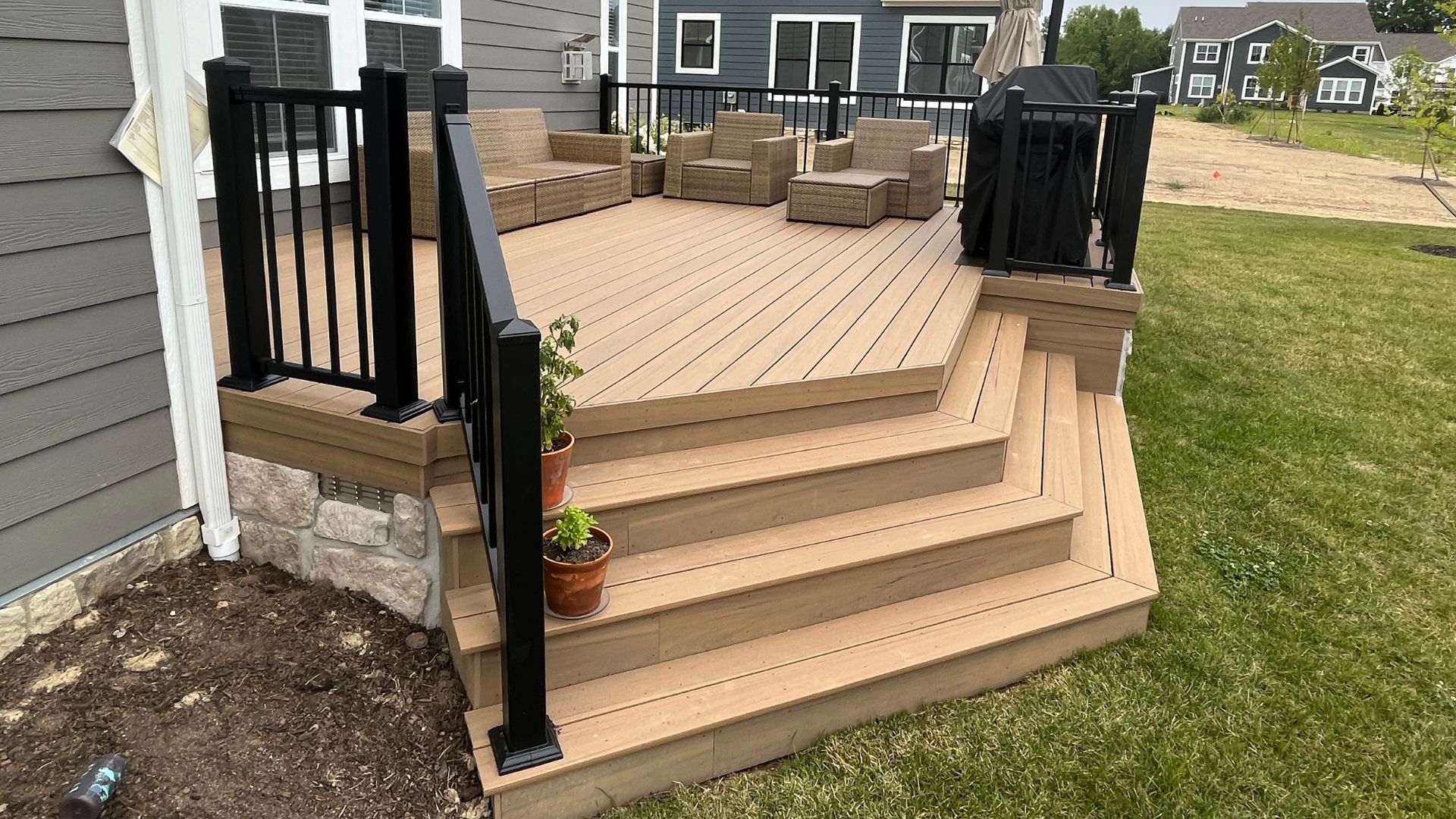
Inside each board is a mix of wood fiber and recycled plastic. Wrapped around that is a tough outer coating, the cap. That shell is what matters in our climate. Older, uncapped composites could soak up water and grow mildew, and some earned a poor reputation for it. The cap solved most of that.
You'll never stain it, and kids can run across it barefoot without a splinter. TimberTech is what our crews put down most often, and we like how it looks after an ugly Ohio February. Composite costs more than lumber at the start. Add up fifteen years of sealer and lost weekends, though, and the gap narrows quickly.
2. PVC Decking
PVC takes the idea one step further. No wood goes into it. Mold, moisture and bugs have nothing to feed on.
Got a deck that sits a foot off the grass, or one shaded by a big maple where the snow just won't melt? That's when we bring up PVC. Composite is good, but in spots like that it can stay wet longer than we'd like. AZEK is the brand we know best, and its textured surface gives a little more grip on an icy morning.
The catch is price. PVC sits at the top of the range for synthetic decking. Plenty of our clients decide it's worth it. Others find capped composite does the job just fine.
3. Pressure Treated Lumber
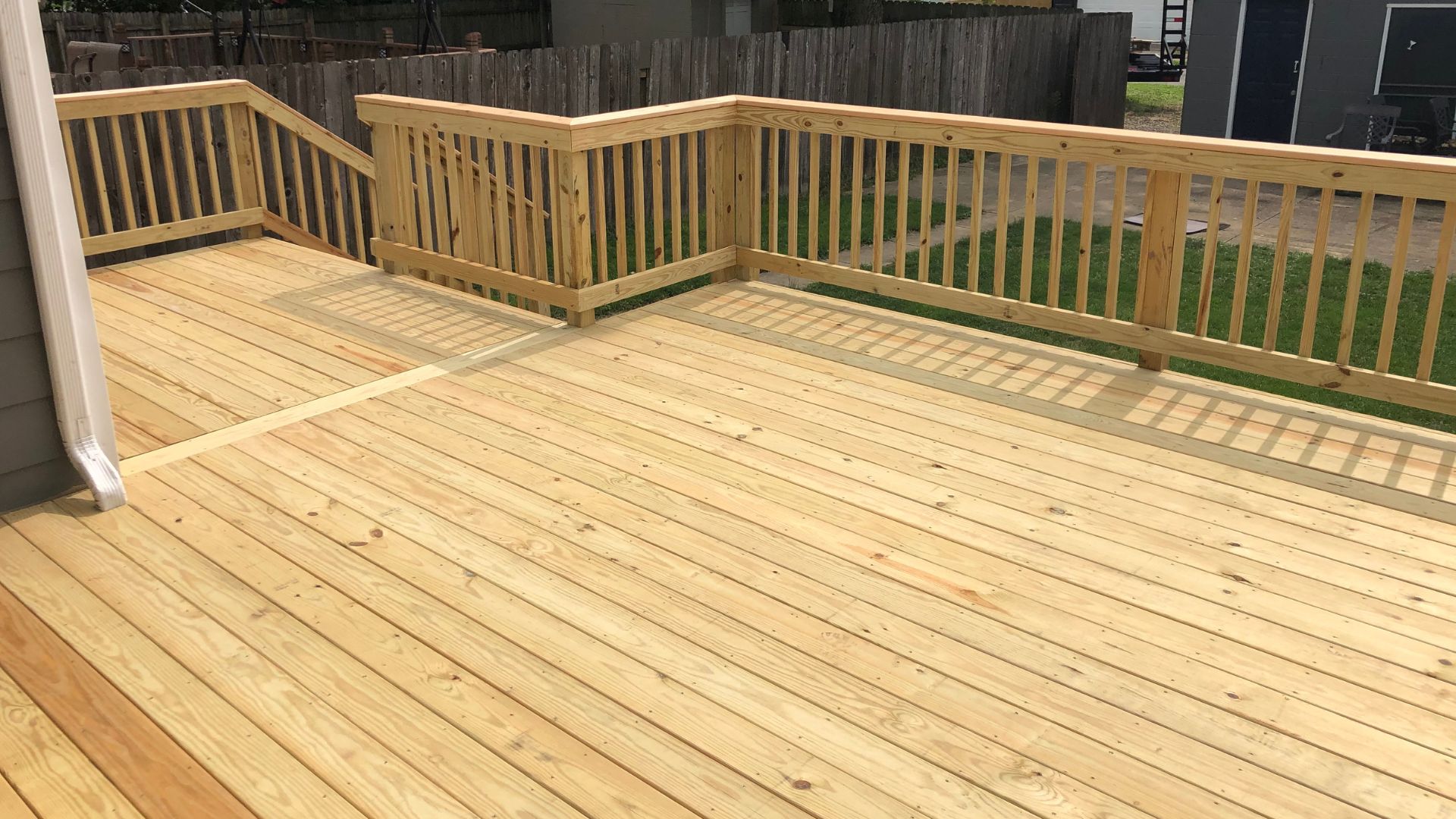
Treated pine is still the most common deck surface in Ohio, and for good reason. It's affordable, easy to find, and it makes excellent framing. In fact, the joists and beams under most composite decks are treated lumber.
Walking on it every day is another story. Miss two years of water repellent and you'll see it by March. Boards cup, split, and turn gray. You'll be out there with a brush and a can of sealer every year or two, swapping the odd board as it gives out. Plenty of people are fine with that. Just know it before you sign.
4. Cedar
Cedar is the material people fall for the moment they smell it. It's lovely to look at, stays flatter than pine, and its natural oils give it some protection against rot.
It's also soft. A metal shovel will leave marks, and a heavy planter dragged across it will too. Without stain and sealer, that warm red color is gone after one or two Ohio winters, and the job never really ends. We still build cedar decks for people who want the real thing. They just go in knowing the deal.
Material Comparison at a Glance
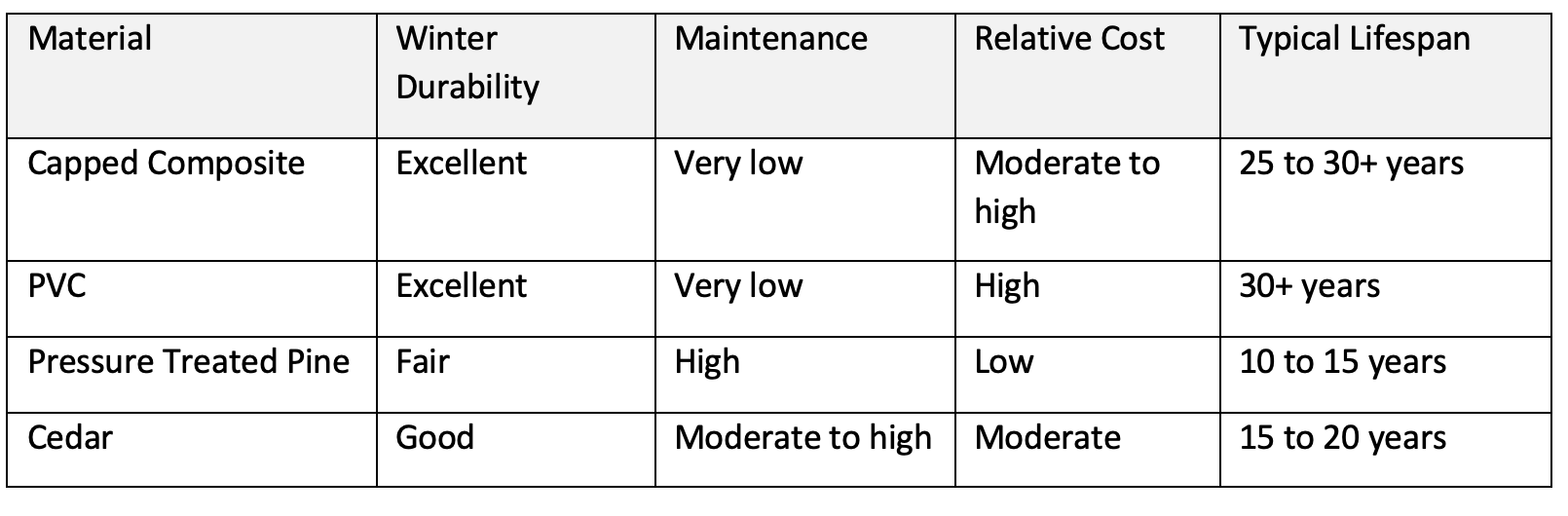
Take those numbers loosely. A cedar deck that's cared for may outlast a composite deck that was framed badly.
Construction Details That Matter as Much as Materials
Here's something we tell clients often: the best boards in the world won't save a deck that was built wrong. In Ohio, a handful of details make a real difference.
Footings below the frost line. When the soil freezes, it lifts. A footing that isn't deep enough rises with it, and before long the stairs are crooked and the door to the deck sticks. Franklin County and its neighbors set minimum depths for exactly this reason.
The right gap between boards. Composite and PVC move with the seasons, a little longer in August and a little shorter in January. Get the spacing right and melting snow drips through. Get it wrong and you've got a sheet of ice by morning.
Airflow underneath. We've torn out old decks built right on top of the dirt, and the joists were soft as cardboard. That's where rot starts.
Protected joists. A strip of flashing tape over each joist keeps water out of the screw holes. It's inexpensive, and it can add years to the frame.
Hidden fasteners. Fewer exposed screw heads mean fewer places for water to get in, and a smoother surface for your shovel.
These details are part of every job we take on. You can read more about our Better Building standards and our focus on deck safety, and we stand behind the work with our warranty.
Caring for Your Deck Through the Winter
A good material does most of the work for you. A few habits handle the rest.
- Sweep off leaves before the first real snow. A pile of wet maple leaves sitting there until March will stain composite and keep wood soaking.
- Retire the metal shovel. Plastic won't gouge anything. Push along the boards, never across.
- Need ice melt? Most composite and PVC makers are fine with calcium chloride. Hose it off on the first warm day.
- Keep rock salt off wood decks entirely.
- Shift the planters and chairs once in a while. Otherwise, the spot under them never dries out.
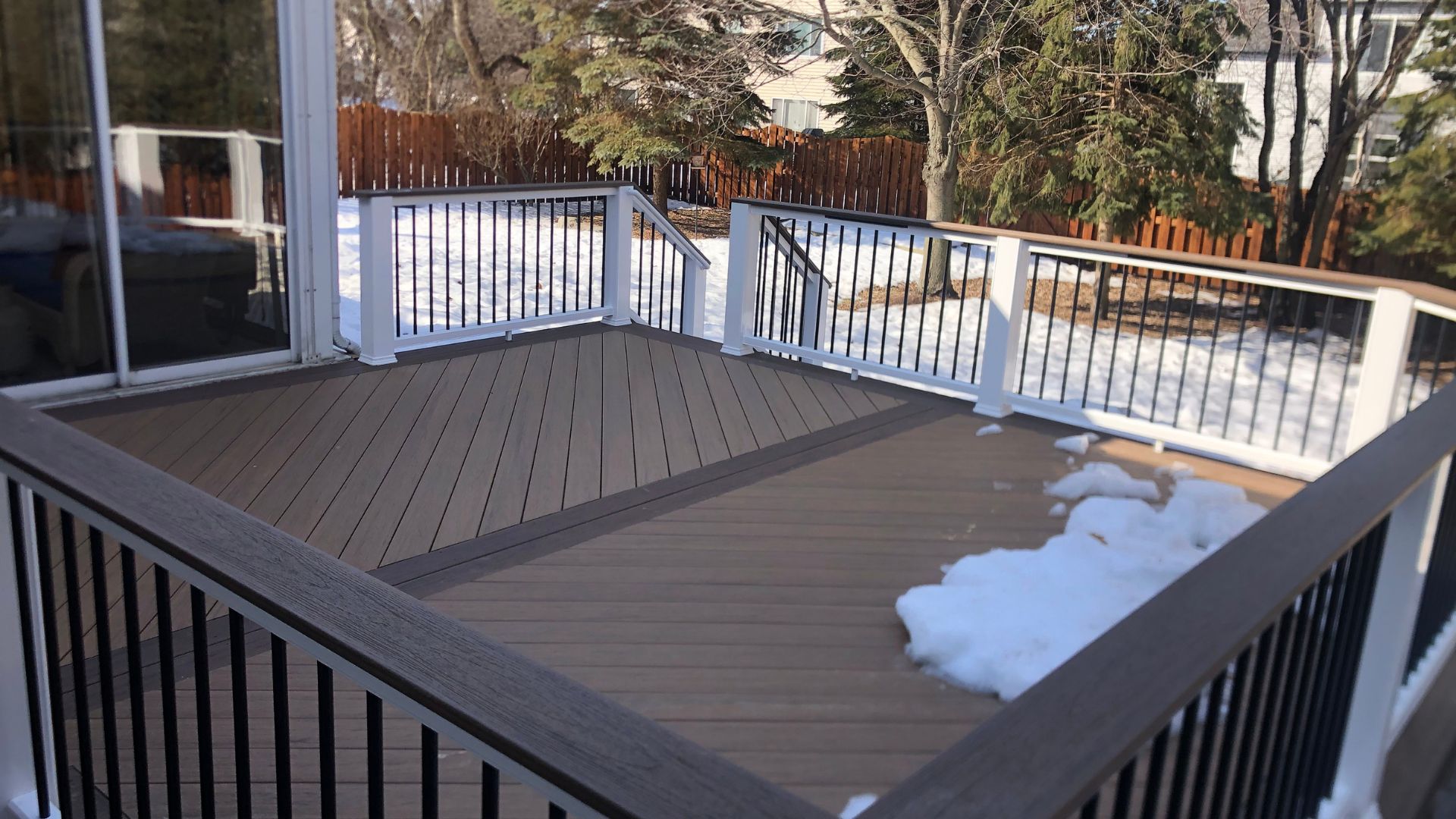
Is your deck already looking tired? You might not need a new one. Plenty of frames have life left after the boards wear out. When that's the case, our redecking crew tears off the surface and lays new composite or PVC on top. You pay for boards, not a whole new deck.
Our Short Answer for Central Ohio
For most homes in Central Ohio, our honest answer is capped composite or PVC. Nothing else we install handles freeze and thaw as well for the money, and you won't spend April weekends sanding. Pine and cedar? Still good picks if the budget is tight, or if you just want real wood and don't mind the work. Hardwood and aluminum are for fewer people, and that's fine.
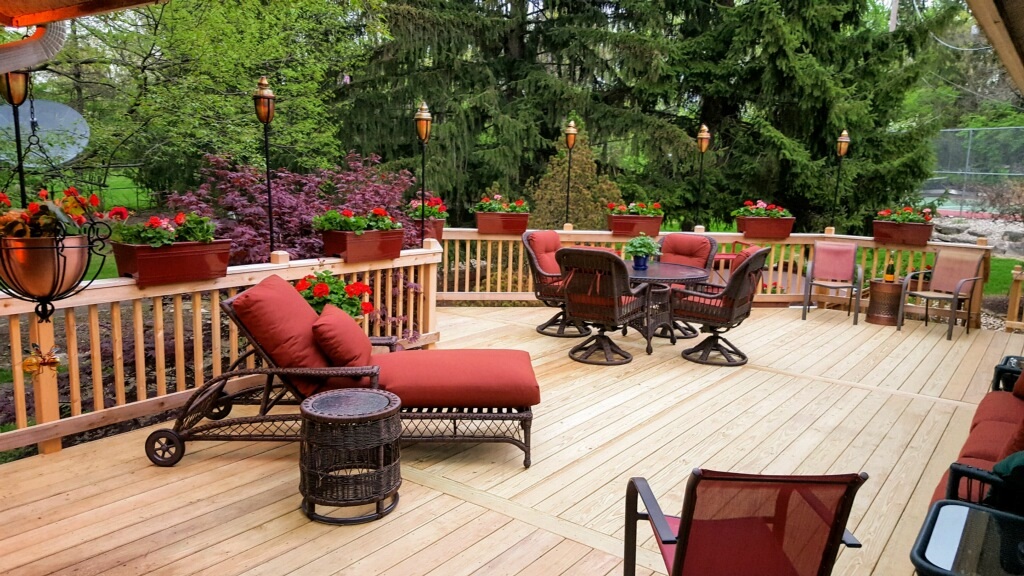
Think about how your family will use the deck before you pick a board. A few of our clients pair theirs with a screened porch or a pergola and end up eating dinner outside well into October. If you're still gathering ideas, browse our deck photo gallery or grab a copy of our free design guide.
Let's Plan Your Deck This Winter
Archadeck of Columbus designs and builds custom decks for homeowners across Central Ohio, including Dublin, Powell, Westerville, Hilliard, and New Albany. We're part of a national company with more than 40 years behind it, and we'll walk you through every material choice in plain language. Financing is available for qualifying projects.
Winter is a smart time to start the design process, because it puts you near the front of the line when building season opens. Request your free design consultation or call us at (740) 265 3905.
.jpg)
The Archadeck of Columbus Team