Maybe you spent part of this summer staring at a cracked concrete slab, wondering if it's worth saving. Or maybe you've watched your deck boards cup and gray after one too many Ohio winters. Either way, you've landed on the deck-versus-patio question, and it's one of the first ones we get asked, whether the call comes from Dublin, Powell, New Albany, or Westerville. We wish there were a single "best" answer we could give every caller. There isn't. What's right depends on your yard, your budget, and honestly, how you live.
In this article, Archadeck of Columbus walks you through how decks and patios stack up for Columbus properties specifically. Not just generic advice pulled from a national blog, but considerations that matter here, locally, where we get humid summers, clay-heavy soil, and a freeze-thaw cycle that's tough on outdoor structures. We'll also cover a question that comes up more than people expect: can you swap one for the other when it's time to replace an aging structure?
The Quick Answer
If your yard slopes, if you've got a walkout basement, or if you just love the feel of wood underfoot, a deck usually wins. We see this a lot on the sloped lots around Powell and parts of Delaware County, where building up on posts and footings just makes more sense than fighting the grade. A patio usually wins on flatter ground, especially if low maintenance matters to you or you're planning something heavy — a fire feature, an outdoor kitchen, that kind of thing.
That's the short version. Keep reading for the rest of it.
Decks: Built Up, Built for Views
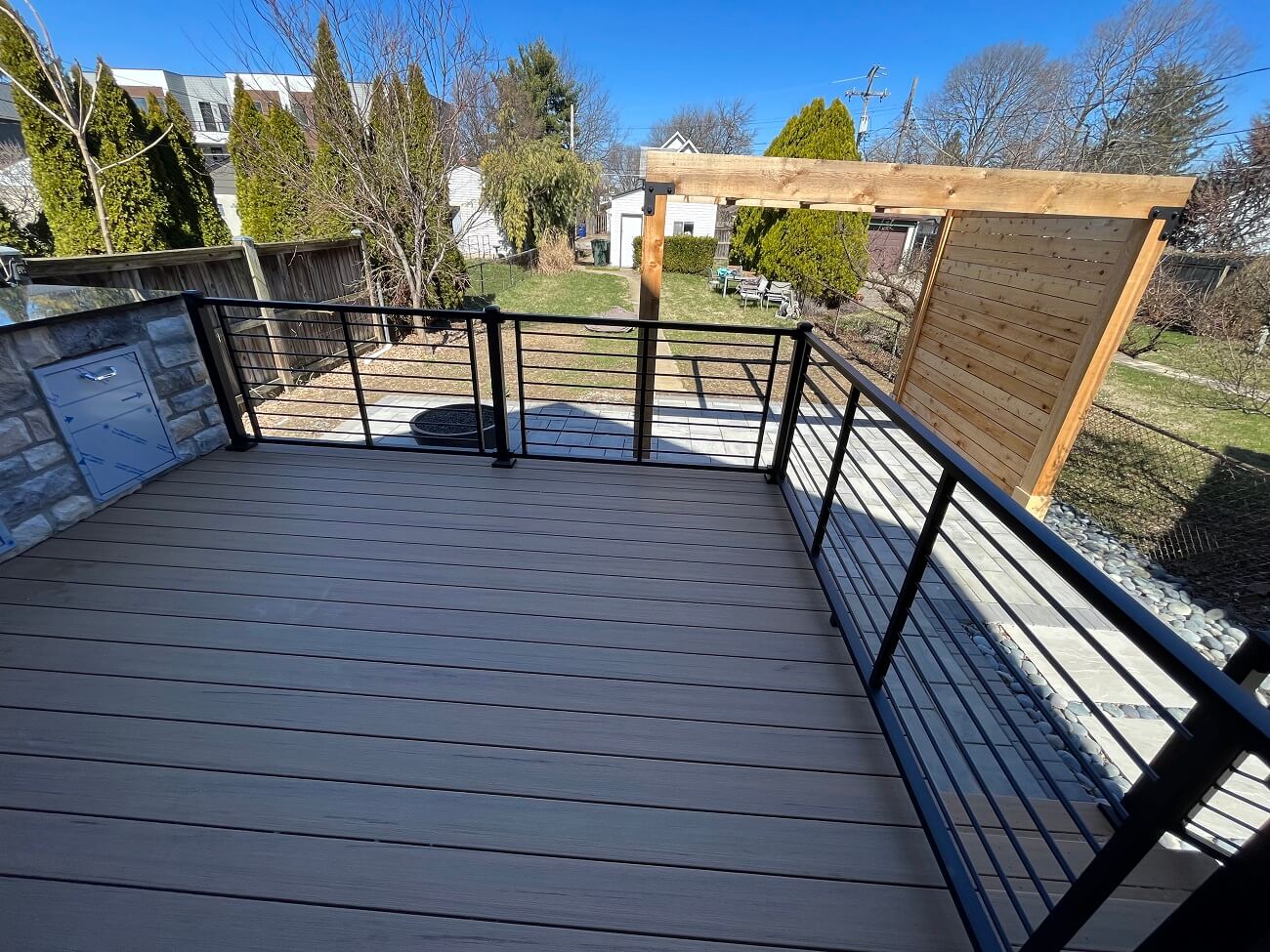
A deck is constructed from wood or composite. It can be freestanding or attached to the house, built up on posts and footings above ground level. Around Columbus we build a lot of these for homes with walkout basements or sloped backyards. Sometimes it's practical, sometimes a homeowner just wants a better vantage point over the yard.
Where decks tend to win:
- Sloped or uneven lots. No need to truck in fill dirt and regrade the yard — a deck just gets built up on posts and footings instead. It's why decks are so common in the hillier pockets around Powell, Worthington, and parts of Galena.
- Elevated living. Kitchen or family room sitting above the yard? A deck lets you walk straight outside without a set of stairs down to a lower patio first.
- Materials give you options, too. Pressure-treated wood, cedar, or a composite like TimberTech, each with its own look, price tag, and upkeep.
- And in a lot of cases the build itself goes faster, simply because there's less digging and excavation than a full hardscape job requires.
Where decks ask more of you:
Wood decks needs regular maintenance. This means sealing or staining to fight off Ohio's humidity and freeze-thaw swings — skip a season and you'll likely see graying, warping, or splintering sooner than you'd like. Composite, vinyl and PVC decks solves most of that but may cost more upfront. Either way, a deck's structural components (footings, joists, ledger boards) need to be built and maintained correctly, since a poorly attached deck is one of the more common safety issues we see when inspecting other builders' work.
Patios: They Sit Low, and They Ask Less of You
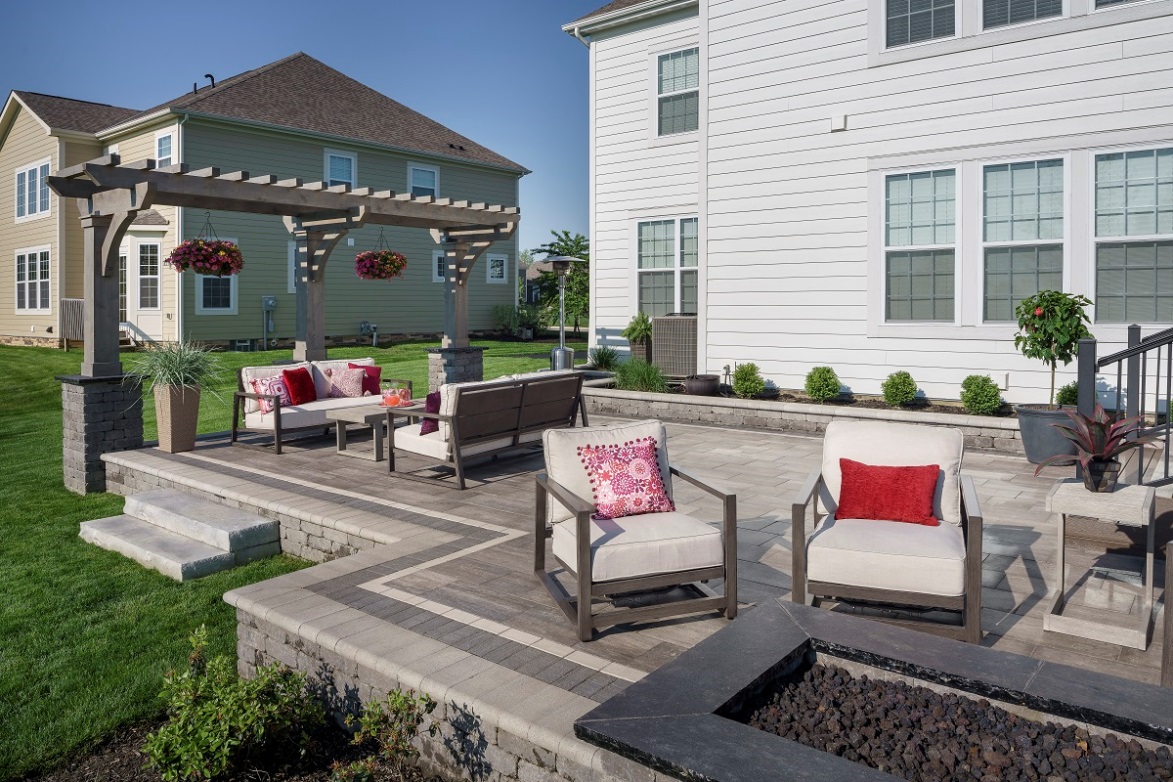
A patio sits at or near ground level and is usually built from pavers, natural stone, or stamped concrete. On flatter Columbus lots, including Hilliard, Grove City, and Reynoldsburg fits this description. A patio tends to be the simpler, more natural choice.
Here's where they pull ahead:
Upkeep, for one. There's no staining schedule to keep track of. Pavers might get an occasional rinse and a top-off of joint sand, and that's about it. Weight capacity is another aspect; if you're picturing a stone pizza oven, a heavy fireplace, or a full outdoor kitchen someday, a patio on a properly compacted base carries that load a lot more comfortably than a raised deck would. Longevity tends to favor patios too; a paver or stone patio installed correctly can outlast a wood deck by decades, and if a paver does crack down the road, you can usually swap that one piece instead of tearing up the whole thing. And because a patio sits close to the ground, it's an easier transition for young kids, older parents, or a dog who doesn't love stairs.
.jpg)
Where patios ask more of you:
Here's the catch, though: our soil moves. Columbus clay swells and shrinks with moisture, and a hard freeze-thaw winter can nudge a poorly built patio out of level before you know it — you'll notice it as puddling in one corner, or a paver that's suddenly higher than its neighbor. Base prep and drainage aren't the exciting part of a patio project, but they're the part that determines whether it still looks good in ten years. Archadeck knows the local topography and ensures drainage and slope are addressed prior to breaking ground on any structure we build.
Cost and Maintenance, Side by Side
Generally speaking, a basic wood deck costs less to install than a comparably sized paver patio, while composite decking and premium natural stone patios often land in a similar range. Where the real cost difference shows up is over time: a patio's lifetime maintenance costs are usually lower since there's no refinishing cycle, while a wood deck will need periodic staining, sealing, or board replacement to stay in good shape.
Neither answer is "cheaper" in every scenario — it depends on the materials you choose, the size of the space, site conditions like grading and drainage, and access for equipment. This is really a conversation best had during a design consultation, where we can look at your actual property rather than a national average.
Don't Forget: You Don't Have to Choose Just One
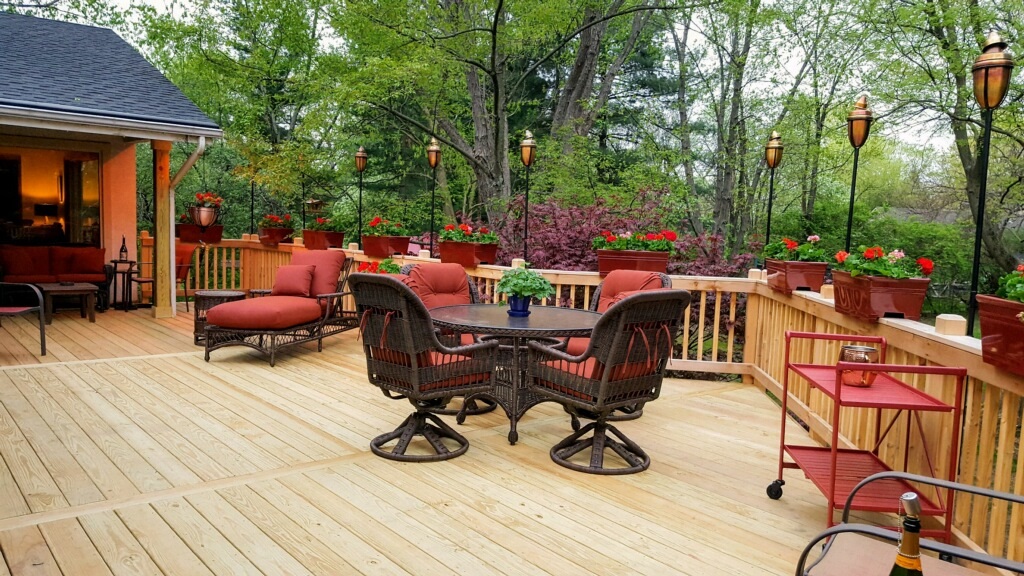
Some of our favorite Columbus projects aren't a deck or a patio — they're both, working together as an outdoor living combination space. A common layout we build is an elevated deck off the back of the house that steps down to a paver patio below, giving homeowners a grilling and dining area up top with a fire pit or lounge space at ground level. It's a great solution when part of your yard is elevated and part is flat, and it lets you zone your outdoor living the way you'd naturally divide rooms inside your home — one space for cooking and eating, another for relaxing by the fire, maybe a screened porch tying it all together.
A deck-and-patio combination also spreads out your maintenance. The composite deck stays low-fuss up top, while the patio below handles the heavier features and daily foot traffic. If you're not sure which direction to go, a combination project is worth asking about during your consultation.
Replacing an Aging Deck? You're Not Locked Into Building Another Deck
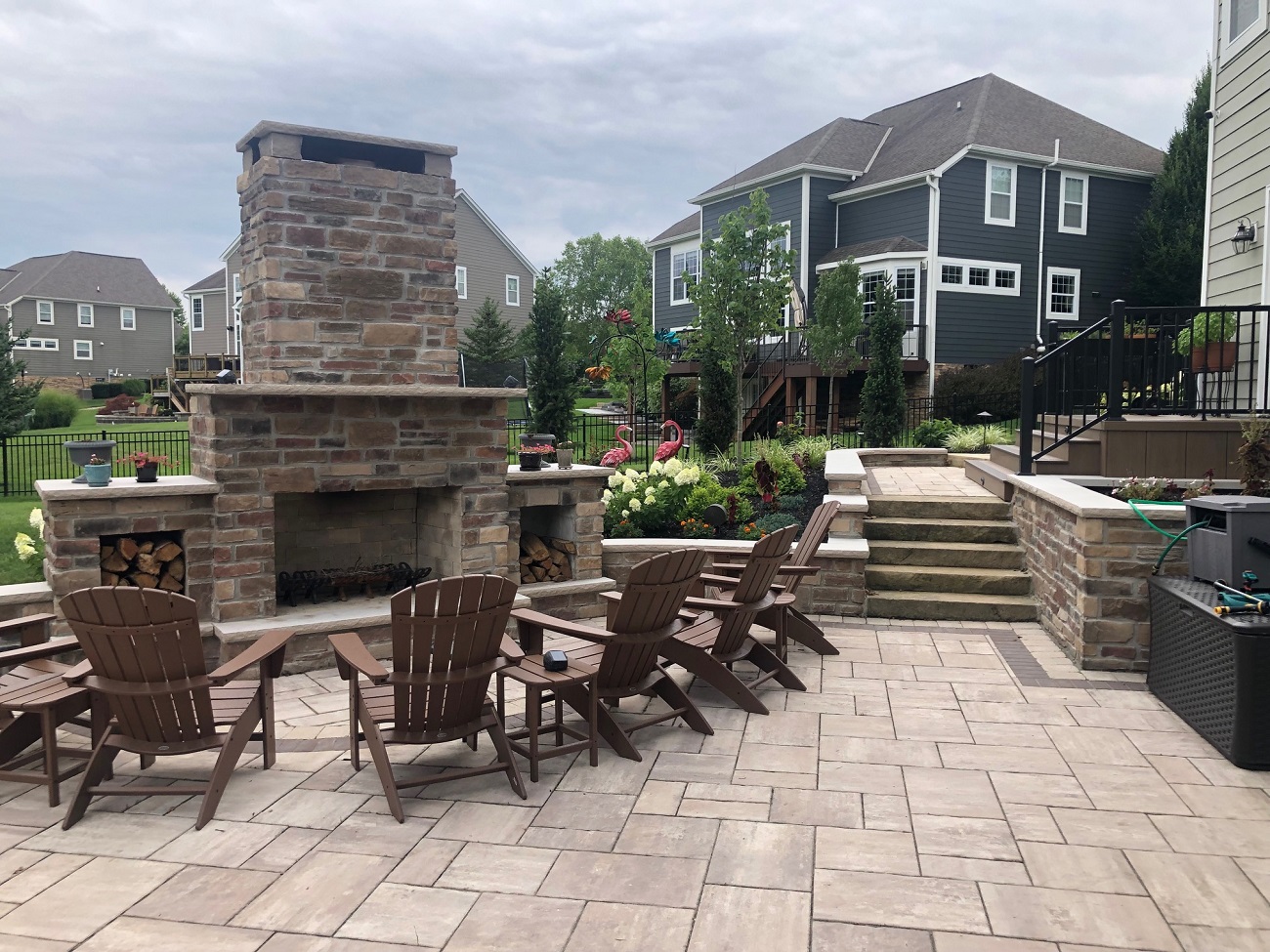
This is one of the more underrated conversations we have with Columbus homeowners. If your existing deck is 15 or 20 years old and starting to show its age — soft boards, rusting fasteners, that persistent wobble on the stairs — you don't automatically have to replace it with another deck. Depending on your yard's grade and how the space connects to your home, converting to a patio at that point can actually make sense, especially if low maintenance has become a priority or if you're ready to add a fire feature or outdoor kitchen that needs a solid, ground-level base.
The reverse is just as true. Homeowners with an aging, cracked, or heaving concrete patio sometimes decide a raised deck is a better second act, particularly if drainage around the old patio was never quite right or if they'd rather get elevated above yard-level drainage issues altogether.
Either direction is a legitimate option, and it's one more reason a proper design consultation matters — a good designer will look at what's going on with your existing structure and your soil before recommending a like-for-like replacement.
A Few Questions Worth Asking Yourself First
Where does the water go after a heavy rain? Watch your yard the next time it pours — central Ohio clay doesn't drain fast, and that matters for deck footings and patio base prep alike.
Which way does your lot slope, toward the house or away from it? Honestly, this one question settles the deck-or-patio debate for a lot of homeowners before we even get to the design table.
How much upkeep are you willing to do? Be honest with yourself here. Staining a deck every couple of years sounds simple until it's your Saturday.
Is there something you'll want to add later — an outdoor kitchen, a fire pit, maybe a hot tub down the road? That changes the structural conversation quite a bit, so it's worth thinking about now rather than after the concrete's poured.
And how does the space need to connect back to your house? A walkout basement, for example, points you in a different direction than a raised main floor does.
Let's Figure It Out Together
There's no shortage of opinions on deck versus patio, but the honest answer almost always comes down to your specific lot, your home's layout, and how you want to live outside. That's exactly what a complimentary design consultation with Archadeck of Columbus is for. We'll walk your property, talk through your goals, and give you an honest recommendation, whether that's a deck, a patio, a combination of both, or a replacement that changes direction entirely from what you have now.
Serving Columbus and the surrounding communities including Dublin, Powell, Westerville, New Albany, Hilliard, Grove City, Reynoldsburg, and Delaware. Archadeck of Columbus has been helping homeowners plan and build outdoor living spaces they'll readily use for years to come.
Ready to talk through your options? Schedule your free design consultation or give us a call at (740) 265-3905.
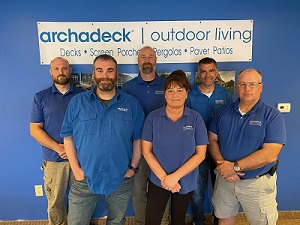
The Archadeck of Columbus Team
Also Read: