Ask ten homeowners in Bountiful what they want in a new backyard and at least half will mention a fire. We hear it constantly. October nights on the bench get cold fast, and nothing pulls people outside like a fire pit or an outdoor fireplace.
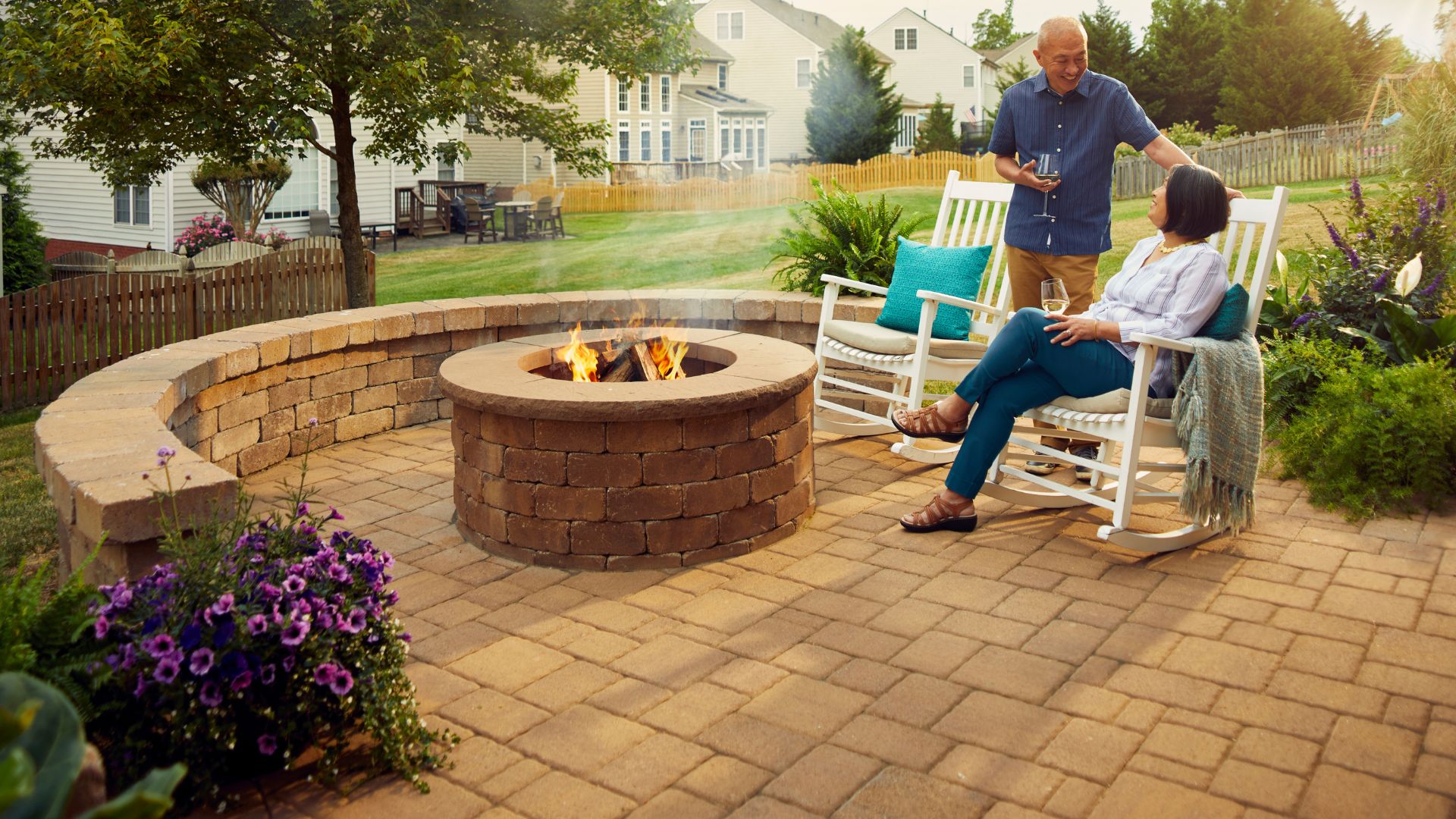
Here’s the catch. Around here, you’re juggling three rulebooks at once. One deals with wildfire, one with winter air, and one with how dry the summer gets. Different agencies wrote them for different reasons. Sometimes they overlap. Sometimes they don’t.
And the wildfire rules just changed. Twice. Below is our plain reading of where things stand for homeowners in North Salt Lake, Bountiful, Centerville, Farmington, Kaysville and Salt Lake City, along with the design choices that keep a fire feature legal all year.
Utah’s Wildland Urban Interface Code
Fire officials call it the WUI. It’s the strip of land where neighborhoods run into brush and grass that can carry a wildfire. If your back fence looks out at the foothills in North Salt Lake, Bountiful or Farmington, odds are decent your lot is in it.
Back in 2025, the Legislature passed House Bill 48. It gave every city until January 1, 2026 to adopt the state WUI code. The state forestry division published a High Risk WUI Map that December, and you can look up your own address on the Utah Wildfire Risk Tool. North Salt Lake’s City Council adopted its ordinance on December 16, 2025, with about two weeks to spare. The city didn’t apply it everywhere, though. It covers properties inside a mapped overlay area near the foothills.
Then came 2026. House Bill 41 moved Utah to the 2024 International Wildland Urban Interface Code, with most of it taking effect January 1, 2027. Cities get two years to catch up. Centerville didn’t wait. Its council adopted the 2024 edition this spring, effective the same date.
Where does a fire pit fit into all this? Mostly through construction. The WUI code cares about what the house and yard are built from, how much cleared space sits around the home, and whether anyone’s burning after officials have said not to. Inside the overlay, anything you add or alter has to follow it. A masonry fireplace would count. A pergola wrapped around a hearth probably would too, and a deck rebuilt for a fire table might as well. Our advice is simple. If you live near the foothills, pull up your city’s overlay map before anyone sketches a design.
The 25 Foot Rule (and a Few Others)
Most of the hard numbers come from the International Fire Code, which Utah uses statewide.
- Recreational fires. A wood fire with a pile up to 3 feet wide and 2 feet tall can’t be within 25 feet of a building or anything combustible.
- Portable outdoor fireplaces. Chimineas and enclosed fire bowls follow the manufacturer’s instructions and a 15 foot setback. Single family homes and duplexes are exempt from the 15 feet, but not from the manufacturer’s clearances.
- Supervision. Someone stays with the fire until it’s out. We mean cold ashes, not a few embers still glowing at midnight.
South Davis Metro Fire takes care of North Salt Lake, Bountiful, Centerville, Woods Cross and West Bountiful. Their fire pit guidance lines up with the fire code almost word for word. Keep the pit 25 feet off any structure. Keep the pile no bigger than 3 feet wide and 2 feet tall. Have an adult there the whole time, along with a hose, an extinguisher, a bucket of sand or a water barrel. No yard debris. No trash.
That 25 feet catches people off guard. Walk it off on a typical Davis County lot, measuring from the house, the fence, the shed and the pergola, and you may find there’s nowhere left to put the pit. Honestly, that’s the moment most of our clients start asking about gas.
Winter Air Quality Rules
Wildfire gets the headlines. In winter, though, the bigger issue is the inversion. Cold air settles over the valley like a lid, smoke gets stuck underneath, and the Utah Division of Air Quality steps in to limit wood burning before it piles up.
Most days you don’t need a permit for a backyard fire, provided it’s clean, dry wood or charcoal and a responsible person is minding it. Mandatory no burn days are different. The state usually calls them between November 1 and March 1 (though it can call one any time), and they apply in Davis, Salt Lake, Weber, Box Elder, Cache, Tooele and Utah counties. On those days wood fireplaces and stoves stay cold, EPA certified or not, unless the stove is registered as the home’s only heat source. The first ticket is $150. Repeat violations can run up to $299 a day.
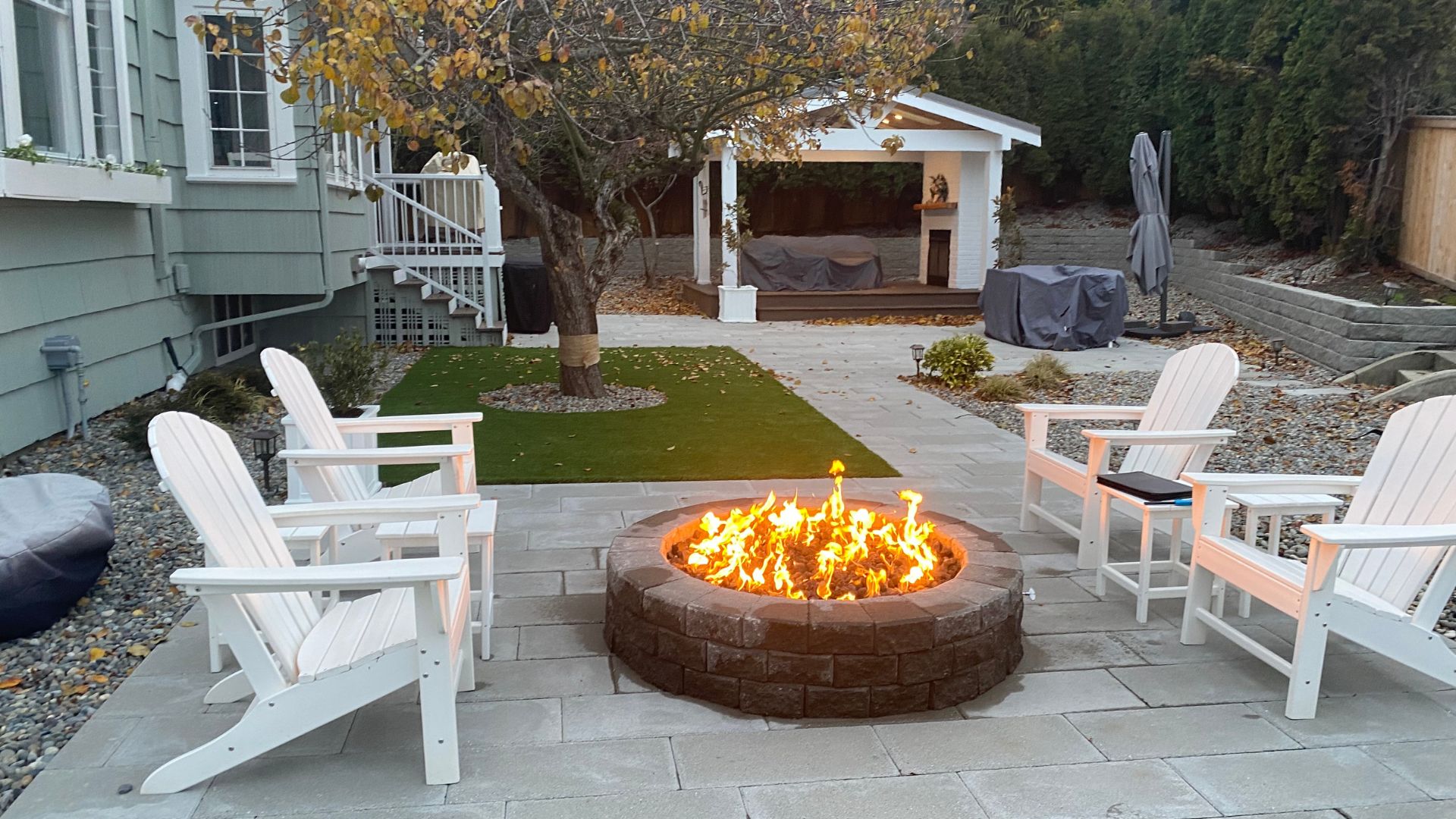
Salt Lake County is stricter. Its health department bans outdoor fires, patio fire pits and charcoal grills included, on voluntary action days as well as mandatory ones.
With November 1 a little over a week away, this is worth knowing now. Check air.utah.gov before you light anything that burns wood. Gas and propane aren’t solid fuel, which makes them the reliable option once inversion season sets in.
Summer Fire Restrictions
When the hills dry out, the State Forester can issue restriction orders, and cities and fire districts often follow suit.
- Stage 1. Past orders for unincorporated Davis County allowed open fires only in developed campground rings and in permanently built fire pits at homes with pressurized water. A portable bowl from the hardware store doesn’t count.
- Stage 2. No open fires at all, even in a built pit or a charcoal grill. Gas and liquid fueled devices with a shutoff valve are still allowed with 3 feet of clearance from anything flammable.
Davis County also has a standing ban on fires in unincorporated land along the Lake Bonneville bench, roughly from Highway 89 up to 5,200 feet, and within half a mile of homes on or above that bench.
Put it together and a pattern shows up. A permanent masonry pit with water nearby can usually keep going in Stage 1. A gas feature with a shutoff can keep going in Stage 2, and on most no burn days too. The portable wood bowl is the first thing to get shut down. You’ll find current orders at utahfireinfo.gov.
Wood or Gas?
Wood is hard to beat because of the atmosphere. The smell, the crackle, the way people drift toward it. If your lot can handle the 25 foot setback, we’d build it permanently out of stone, block or concrete, ring it with a wide noncombustible apron, and put a hose bib close by. Permanent pits also stand a better chance under Stage 1.
Gas solves most of the problems above. A listed fire table or pit follows its manufacturer’s clearances instead of the 25 foot rule, which means it can live right on the patio. No smoke drifting into the neighbor’s bedroom window. Turn a knob and it’s off. It’s also the only kind of fire we’d ever put on a deck.
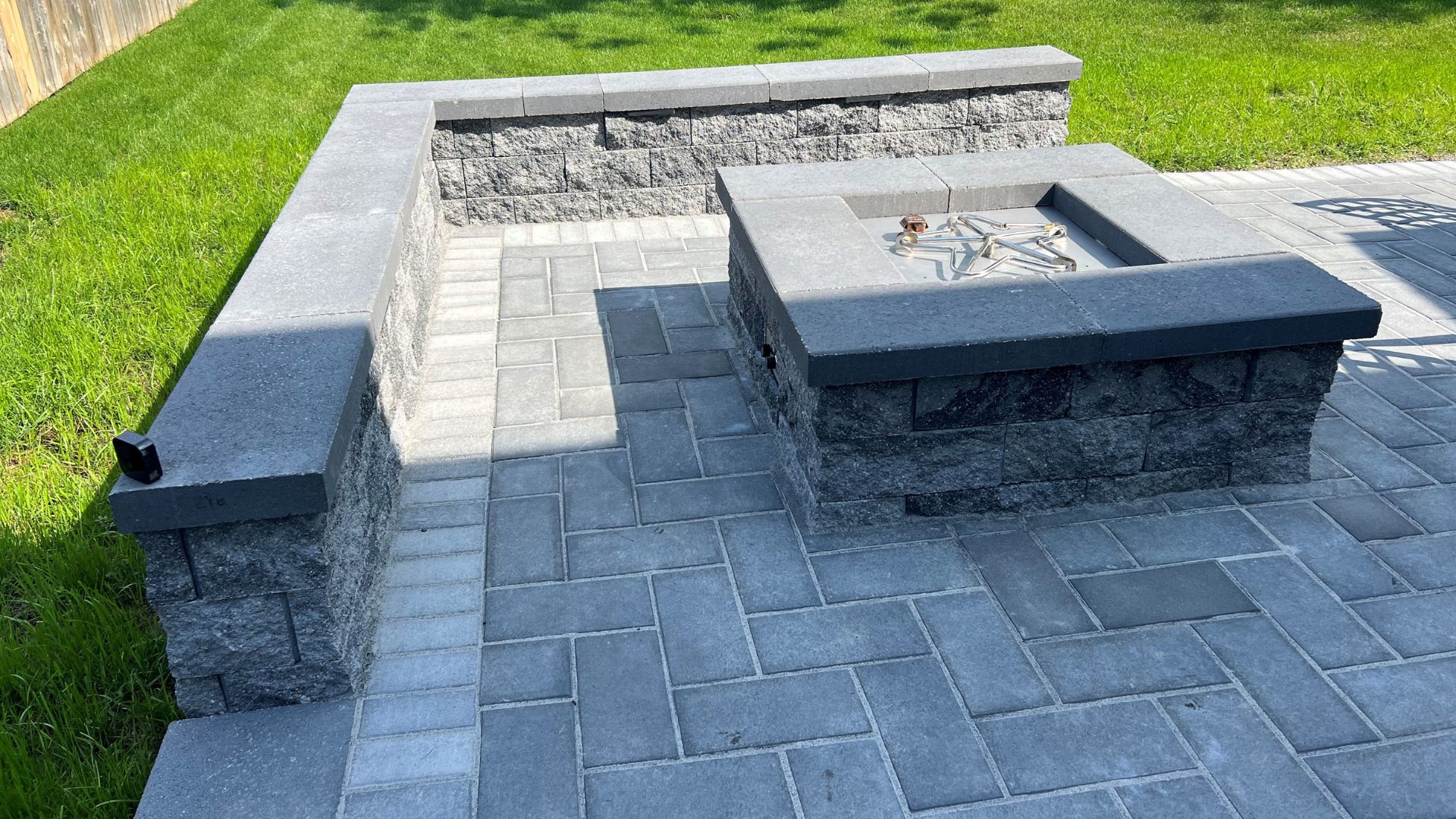
Outdoor fireplaces are the showpiece option. A tall masonry fireplace gives a patio a focal point and blocks the wind besides. Burn wood in it and the same air quality rules apply as they would indoors; run it on gas and they don’t. In a WUI overlay area the structure has to meet the code, and we put a spark arrestor on every wood burning chimney we build, overlay or not. That’s part of how we approach better building in general, and every fireplace we design is a custom design sized to the yard it sits in.
Browse our fire features gallery for examples, or read more on our fire features page.
A Few Things We Check Before Designing
First, who’s your fire authority? South Davis Metro Fire handles North Salt Lake, Bountiful, Centerville, Woods Cross and West Bountiful. Kaysville and Farmington have their own departments. Folks in Salt Lake City and Ogden deal with their city fire departments. Any of them can tell you to put a fire out if conditions turn dangerous. Not sure we work in your town? Our service area page lists every city we cover.
Second, wind. Anyone who’s lived in Davis County through a canyon wind event knows how fast those east winds arrive. We like to tuck fire features behind a wall, a privacy screen or the house itself, and we steer clients away from planting juniper or tall ornamental grasses nearby.
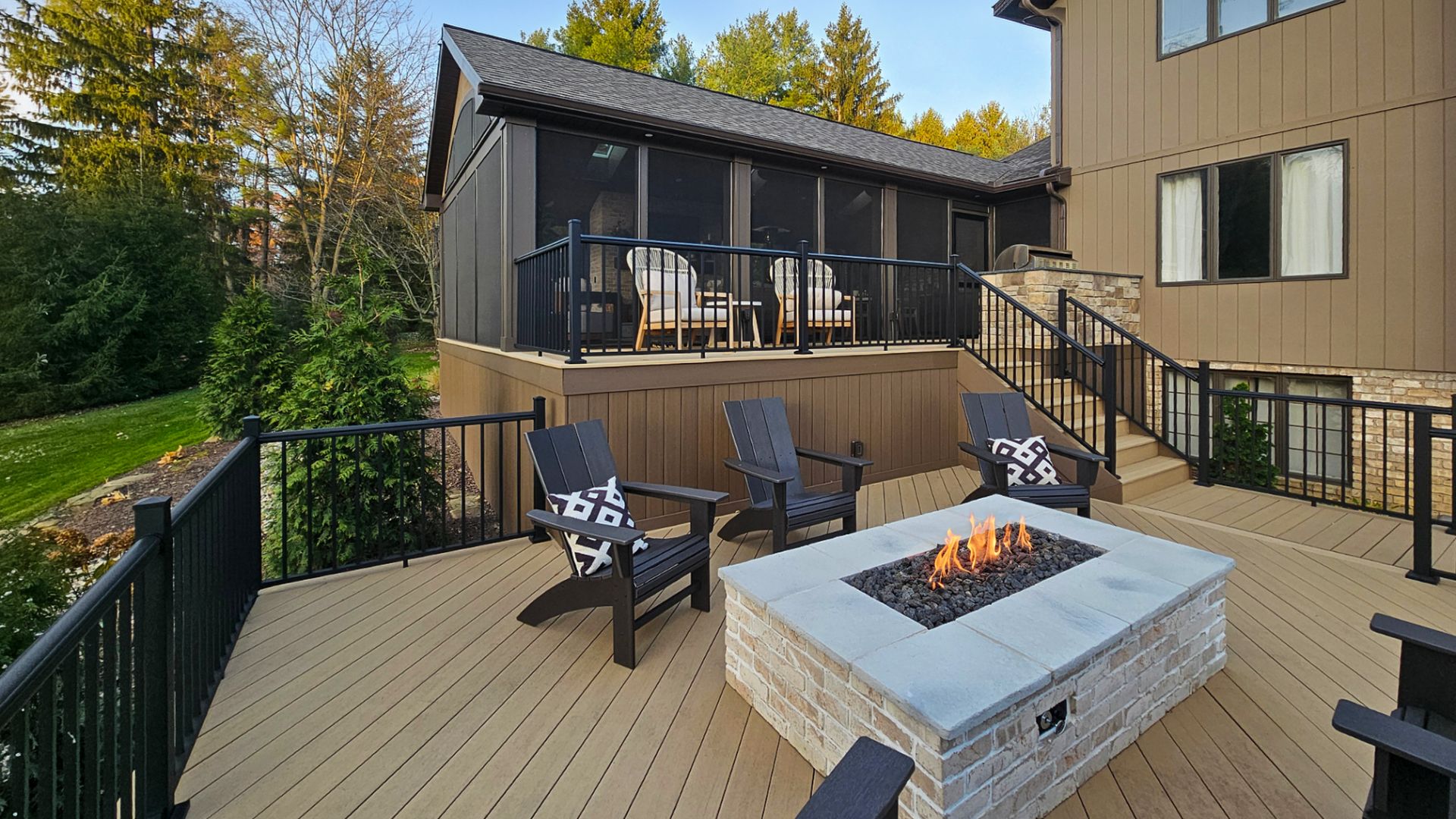
Third, the rest of the yard. A pit that sits next to an outdoor kitchen or inside a stone patio feels like part of the room instead of something dropped in later. Planning it all at once also makes the clearances a lot easier to hit.
Let’s Talk About Your Backyard
Archadeck of North Salt Lake City builds outdoor living spaces across Davis, Salt Lake and Weber counties. We start talking about setbacks and fire district rules at the very first site visit, because nobody wants surprises after the permit comes back. Curious who you’d be working with? Meet our team, or flip through our local project photos.
Still in the idea stage? Our free design guide is a good place to start, and the project pricing page gives you ballpark numbers. Financing is available, and every build is backed by our warranty. Hiring a builder for the first time? Our short guide to choosing a contractor is worth five minutes. You can also see how our process works. Ready to talk? Give us a call at (385) 403 3009, or set up a free design consultation online.
One last thing. We build outdoor spaces; we’re not attorneys, and none of this is legal advice. Rules shift, sometimes from one city to the next or even one lot to the next, which is why a quick call to your local fire authority before you build (or light) anything is always smart.