Step out barefoot onto a plain concrete patio around 4 o’clock in July and you’ll learn quickly why hardscape choices matter so much around here. And it’s not just the heat - our clay soil swells when it rains and pulls apart when it doesn’t. The watering rules seem to tighten every other summer, and every few winters we get a hard freeze nobody planned for.
So, when folks ask us what’s trending, we usually turn the question around a bit. Trendy is nice. Still looking good in 2034 is even better!
Lately the calls we get from Boerne, New Braunfels and everywhere in between sound a lot alike. People want a patio that won’t scorch their feet, doesn’t need babysitting, and actually looks like it belongs in the Hill Country instead of a subdivision brochure. It isn’t just us noticing, by the way. Houzz surveyed close to 1,200 homeowners this spring for its 2026 Outdoor Trends Study, and 57% of the ones redoing their lawn areas were putting in hardscape. That’s 7 points higher than in 2024.
Below are the twelve trends we’re seeing most across San Antonio and the Hill Country, from TPC overlays and Texas limestone to fire pits and outdoor kitchens, plus a few predictions about where things are headed for 2027.
We’ll be upfront: this one’s popular. It’s the project we get a ton or requests for.
Most homes around town came with the same thing out back; a sparse, rectangle of gray builder-grade concrete. It does the job, sort of. Then it cracks, picks up grease stains from the grill, and soaks up enough sun to fry an egg (we haven’t tried, but we’ve been tempted). The old fix was a jackhammer, a dumpster and a couple of weeks of noise. Plenty of people just lived with the ugly slab instead.
A TPC overlay patio gives you options. Whether it is a new patio installation, refurbishing the one you already have, or even a patio extension.
There’s a lot to like here. And lighter finishes don’t hold heat the way dark concrete does, so July is a little kinder to bare feet. The texture gives good grip around the pool and the grill. And since it’s finished by hand, you can work in borders, inlays and unique shapes to suit a 1970s ranch house or something built new just last year.
Now, the catch. An overlay can’t fix a slab that’s heaving or sinking. It’ll just cover the problem for a while. That’s why we come out and look before we ever put a number on paper. We can provide sound and honest advice if your patio is a candidate, or if pouring a new one is the best fit. If you want to see finished projects, our patios and hardscapes page has a bunch.
Gray had a good run. We’re seeing a lot less of it.
Unilock’s 2026 trend report calls out a shift toward warmer colors borrowed from stone, clay and weathered wood, and honestly the Hill Country was made for it. Picture the cream and buff of local limestone, a sandy beige, faded terracotta, the tan of a creek bed in August when the water’s long gone.
Part of the appeal is just looks. Warm tones sit comfortably next to cedar, live oaks and native grasses, where gray can come off a little cold. But there’s a practical side too. Lighter colors don’t get as hot, and a blended, slightly textured surface hides pollen, dust and the odd leaf stain way better than one flat color ever will.
With an overlay, the color gets worked in as it’s finished, our overlay finishes are all custom, so going warm is easy. If you’re leaning toward pavers, skip the single solid color and pick a blend.
Nobody in this part of Texas is giving up on natural stone. What’s changed is how people use it.
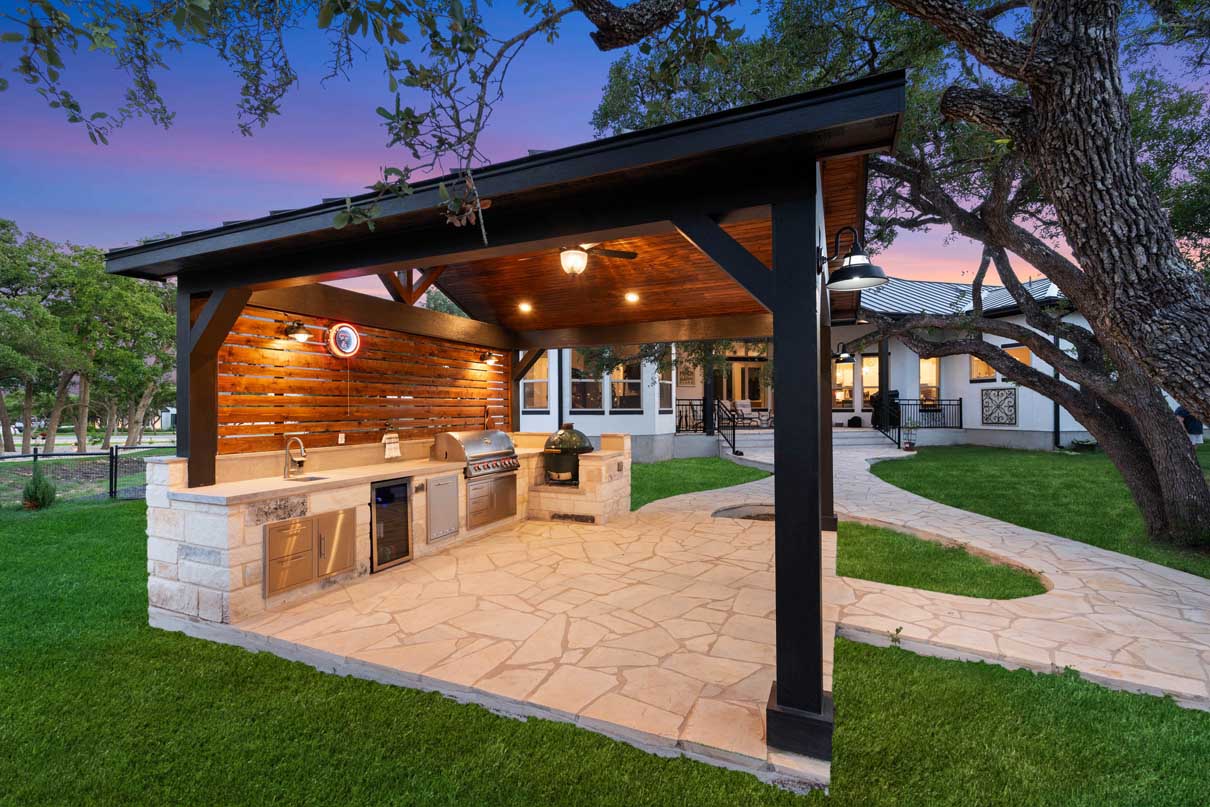
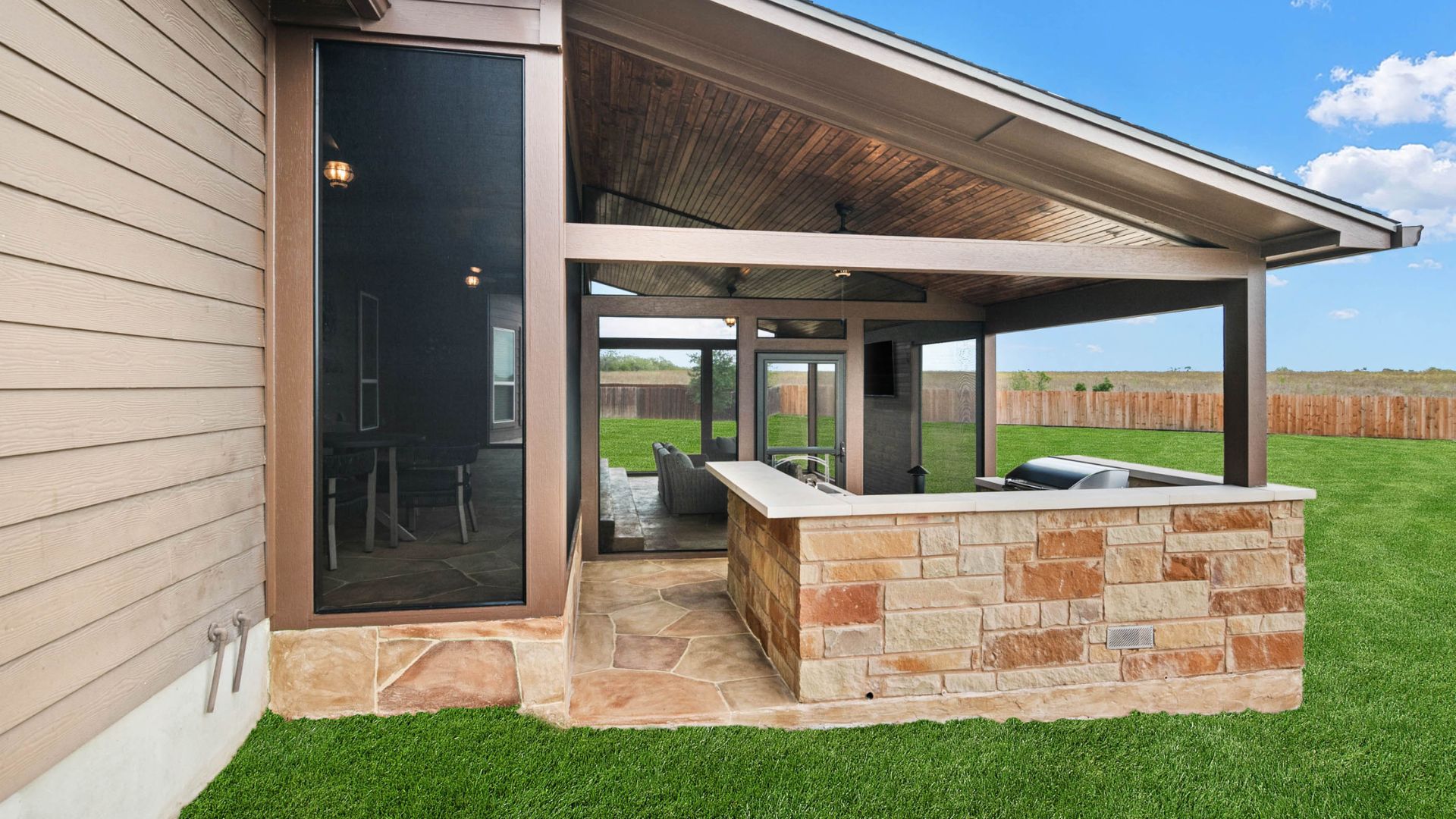
Paving a whole backyard in stone gets expensive fast, so homeowners are spending the money where it shows. A limestone seat wall wrapped around the fire pit. Flagstone steppers through a bed of salvia and native grasses. Travertine coping on the pool. A stacked-stone base under the grill. We did a project in Schertz with Lueders stone and a full outdoor kitchen, and that mix is exactly what people keep asking us for.
Each local stone tends to earn its spot in a different way. Texas limestone is the classic Hill Country look, and the pale color helps with heat. Flagstone’s irregular edges soften a yard that might otherwise feel boxy. Travertine stays pleasant underfoot, which is why you see so much of it around pools.
The combo we keep coming back to is a TPC overlay for the main patio with real stone at the edges, steps and walls. You get that stone character up close, plus a tough, low-fuss surface everywhere you walk.
Pavers are still a solid pick, and they’ve come a long way from the old red brick squares.
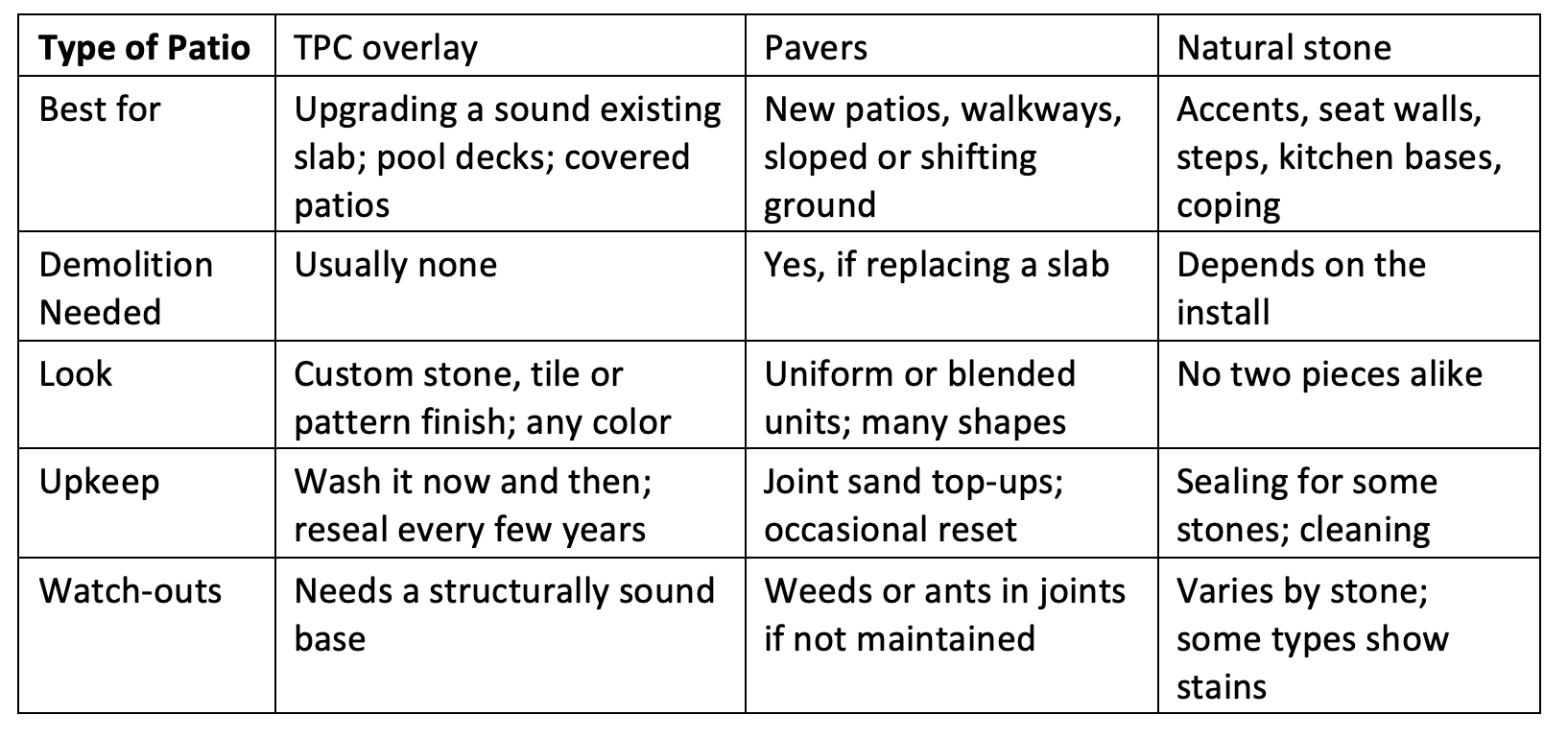
Since every paver is its own little piece, the patio can shift a bit with the ground instead of cracking down the middle. Around San Antonio, where the clay moves every time the weather changes its mind, that’s worth a lot. Need to get at a sprinkler line underneath? Pull up a few, fix it, set them back. You’d never know.
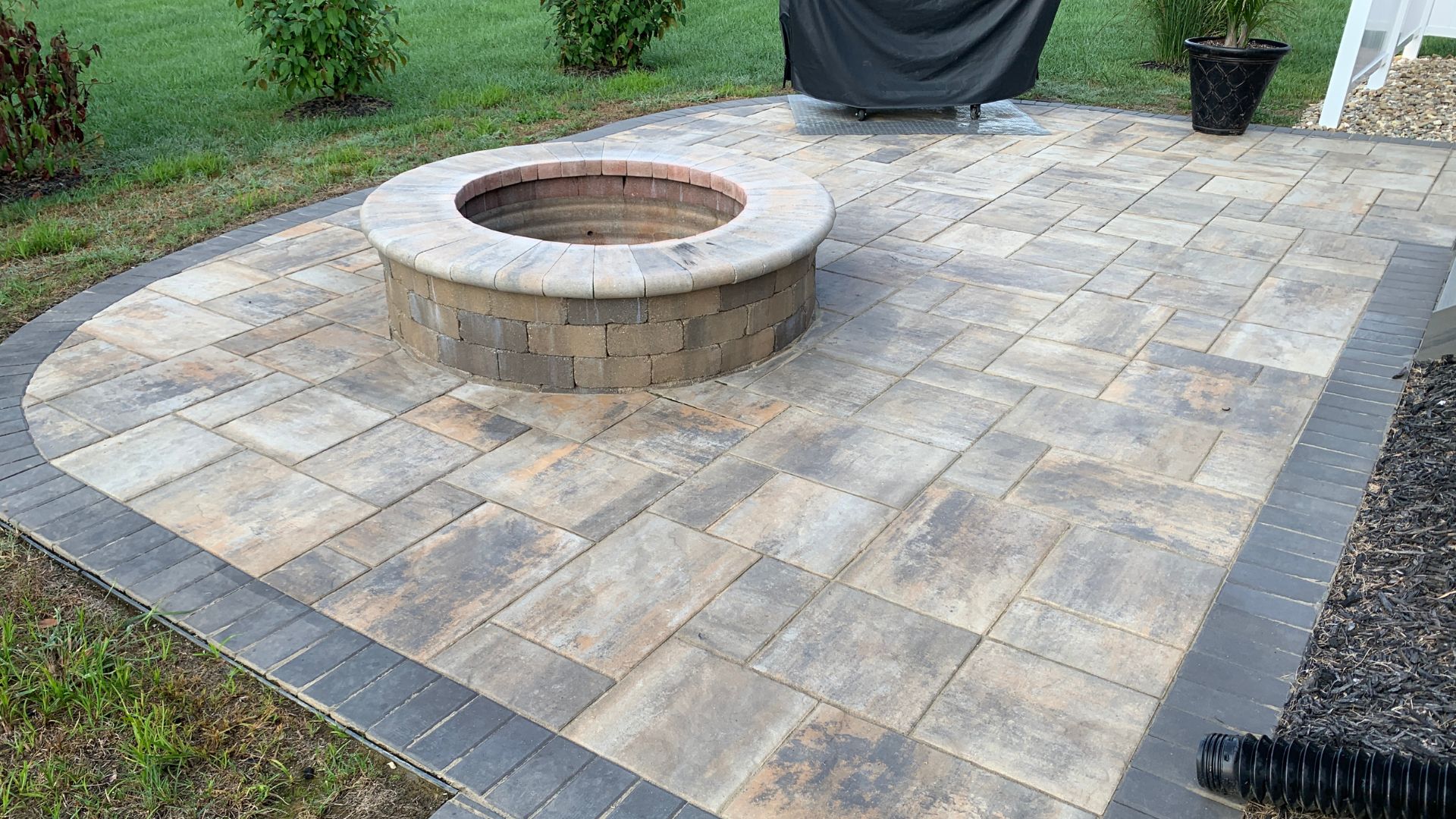
We’re getting asked about two things more and more. One is bigger pavers with tighter, cleaner lines, which suit the newer, more modern homes going up in places like Fair Oaks Ranch and Bulverde. The other is permeable pavers. Rain drains down through the gaps rather than running off across the yard, which helps on a sloped lot and keeps a little more of that water on your property where your plants can use it.
Pavers also make great walkways and side-yard paths leading up to an overlay patio. The change in texture quietly marks where one space ends and the next one starts.
If you want to know what’s really shaping backyards here, look at your water bill.
SAWS put customers back under Stage 3 watering restrictions in late September. That means sprinklers once a week on your assigned day, early morning or late evening only. Stage 3 also bans hosing off driveways and sidewalks, so a patio that hides a little dust between cleanings suddenly makes a lot of sense.
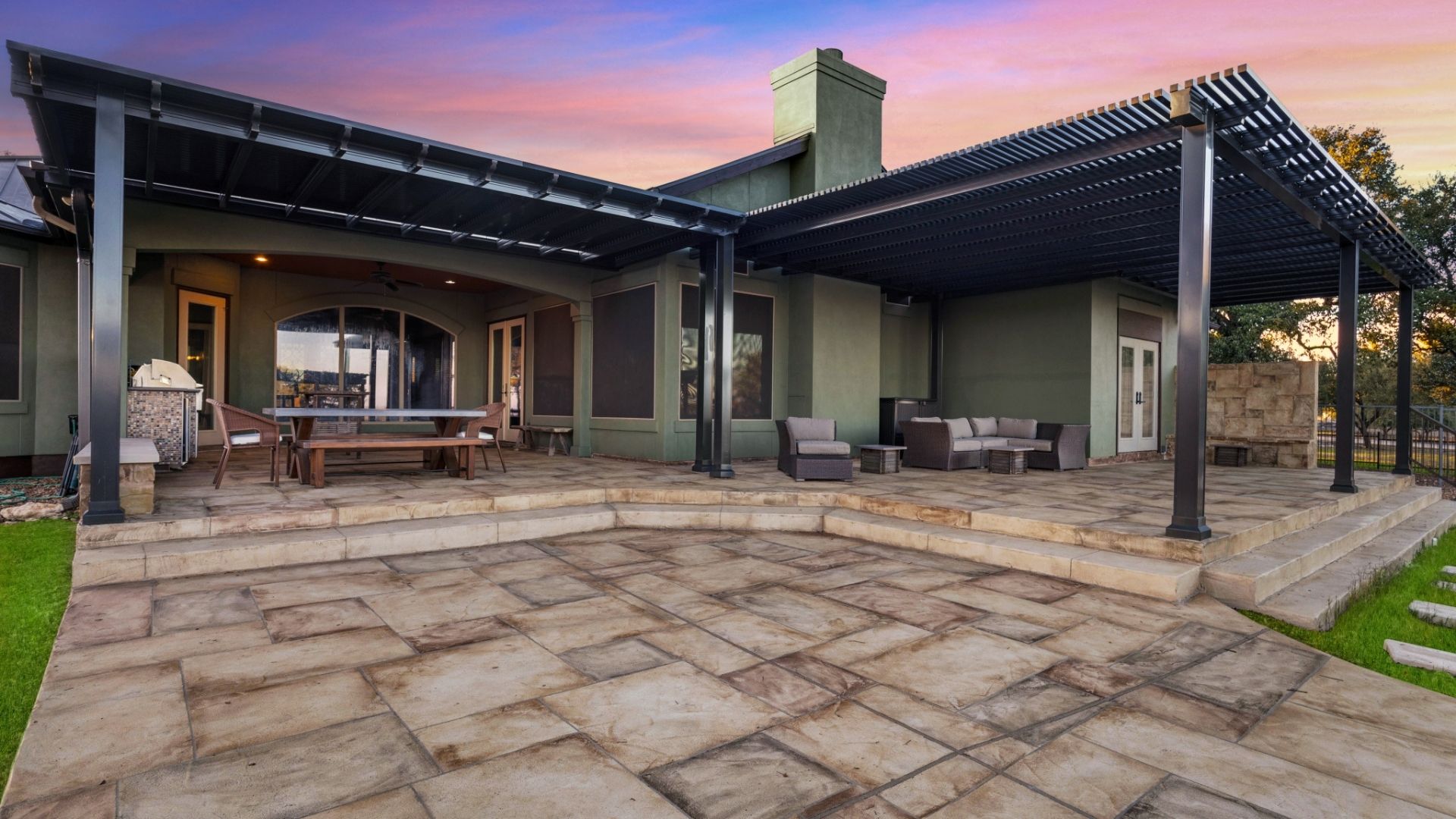
Plenty of people have decided half a lawn is plenty. Houzz found synthetic turf installs rose 10 points to 19% this year, and hardscaping in lawn areas hit 57%. Around here that usually means more patio, a decomposed granite path, a seat wall and native plants that don’t sulk in August. Before you start, check the WaterSaver coupons and rebates SAWS offers for swapping out grass. Some of the cost might come back to you.
And the payoff isn’t only on the water bill. You end up with more space you’ll actually sit in.
From October to about April, an open patio in San Antonio is about as nice as it gets. May through September? Not so much.
Houzz says the share of homeowners adding shade structures jumped 15 points in two years, to 35%. We’d bet that number would be higher if they’d only surveyed Texans. Shade here isn’t a nice extra. It’s the reason you can use your patio in July at all.
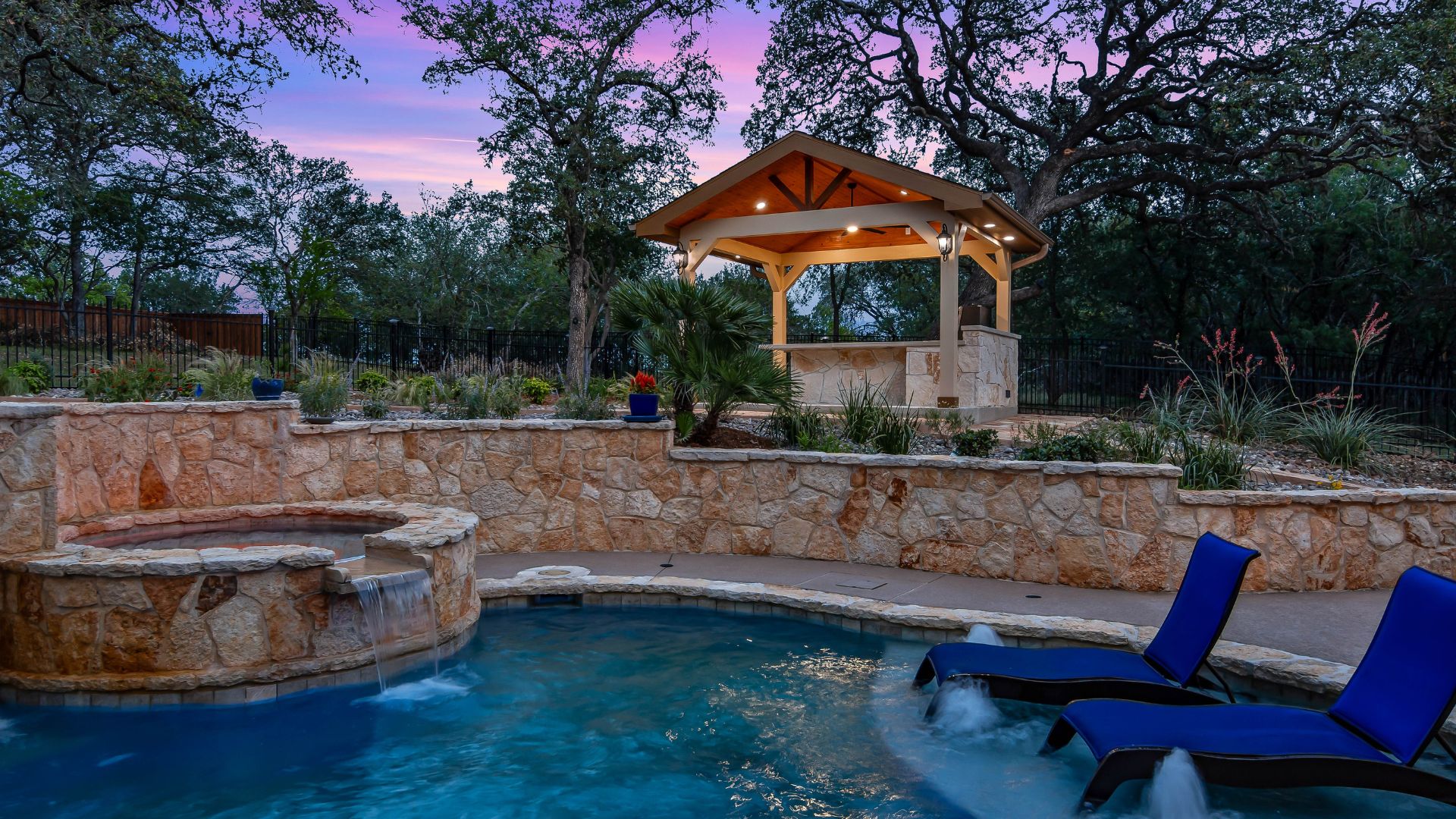
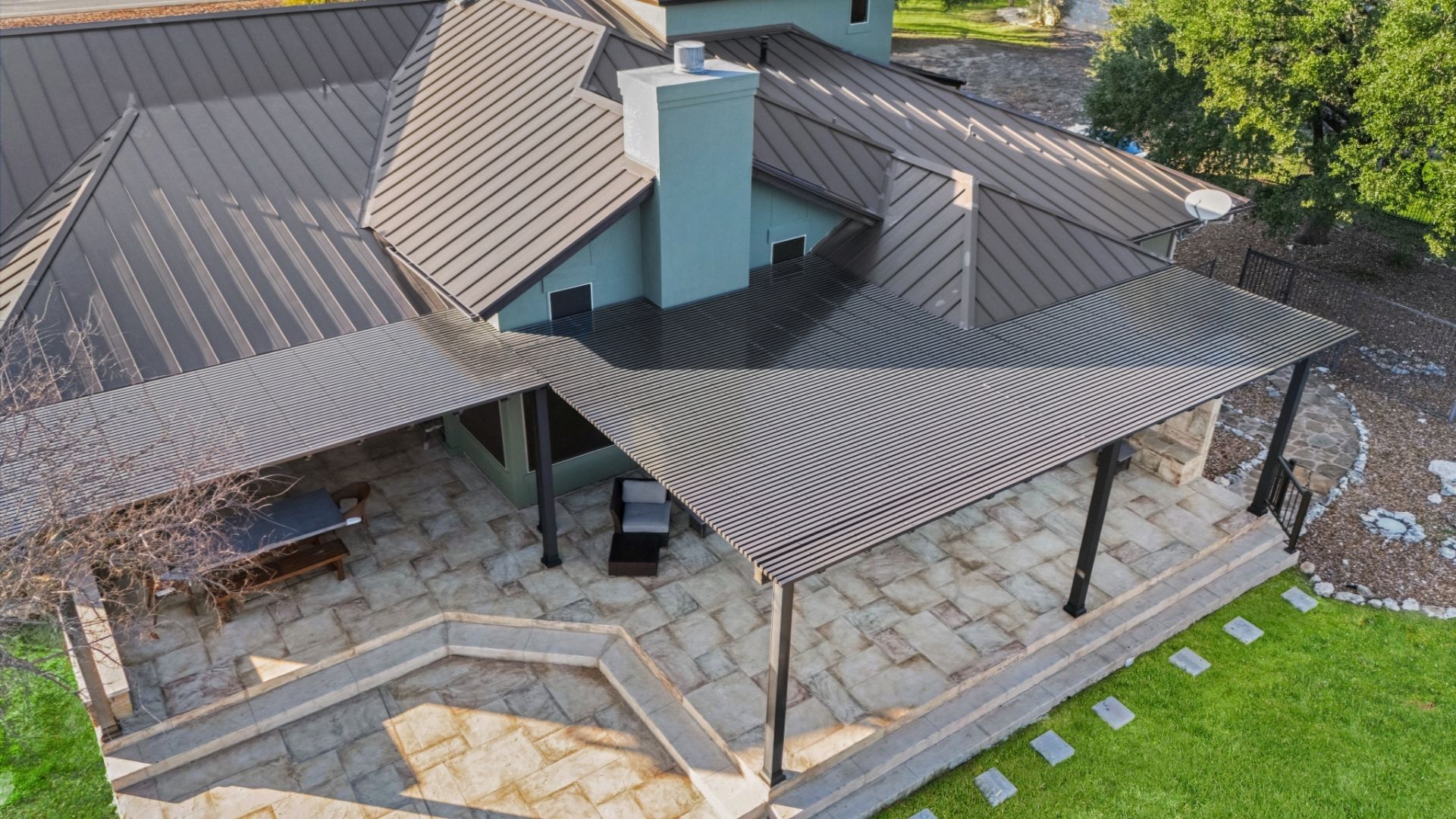
What’s changed is the timing. More people are planning the cover and the patio together instead of tacking one on later, so the footings, drainage and wiring for fans and lights are already in before the new surface goes down. Put a covered patio, pergola or pavilion over a fresh TPC overlay and the whole thing looks like it was meant to be. Mostly because it was.
People are starting to treat the backyard like another part of the house. There’s a spot to lounge, a spot to cook, a spot to eat, and maybe a quiet corner for a book and a glass of tea.
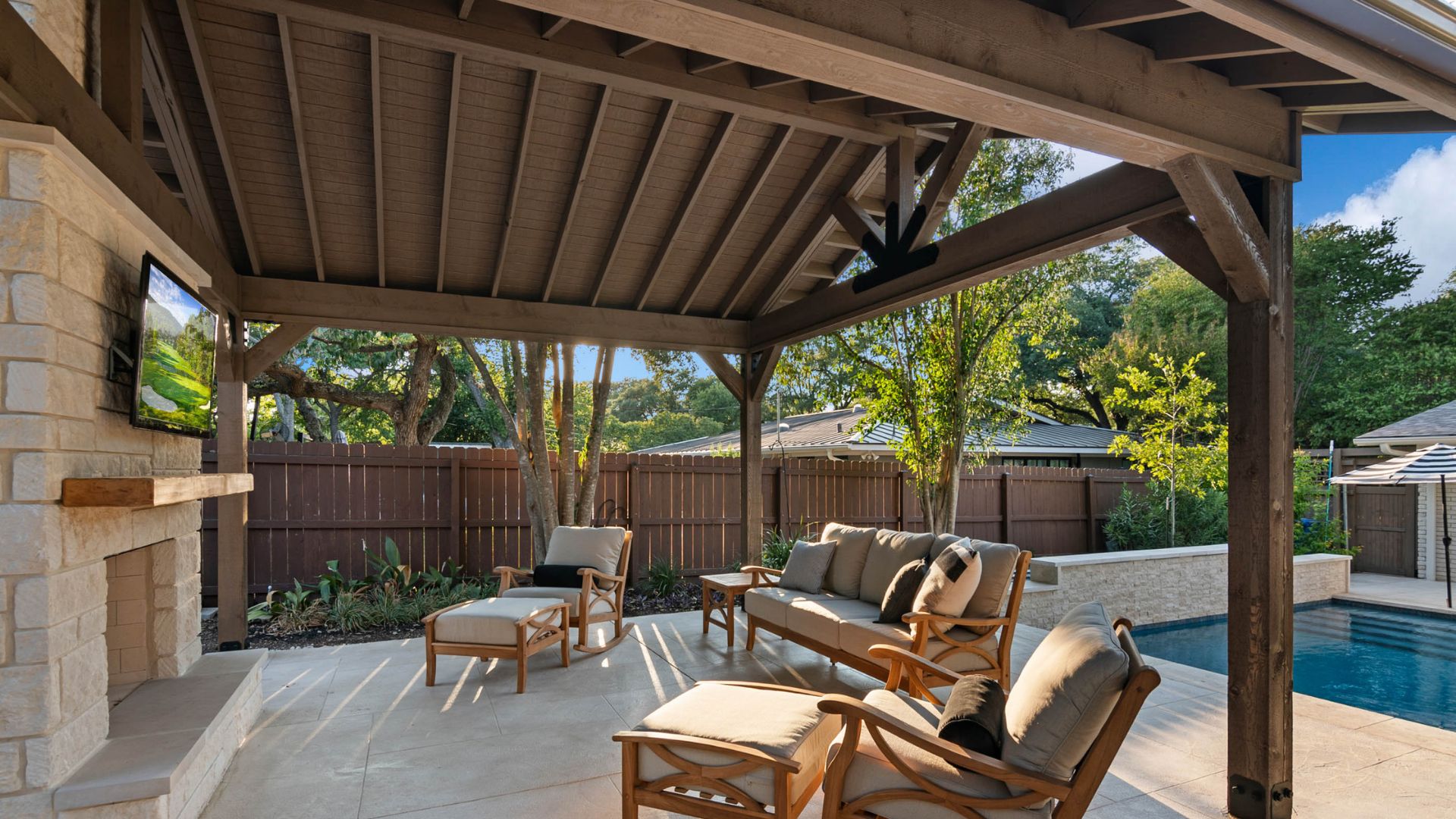
The Houzz numbers are pretty striking. Of the outdoor spaces renovated this year, 83% had a lounge area and 55% had a dining area, and close to half of each included a fire pit or fireplace. The trick is giving each area its own feel without putting up walls. A different paving pattern does it. So does a border, a single step up, or a low wall.
Seat walls have been a big request lately, and it’s easy to see why. They mark the edge of the patio, give you a dozen extra seats on Thanksgiving, and they’re a handy place to hide some lighting.
Patio season around here really gets going once the heat finally breaks, sometime in October if we’re lucky. A good fire feature is what keeps people out there on a chilly November night instead of heading in for the couch.
Houzz found a fire pit or fireplace in 48% of new lounge areas and 49% of new outdoor dining spaces, and 18% of homeowners added one as a project all its own. Most of what we build falls into one of three camps.
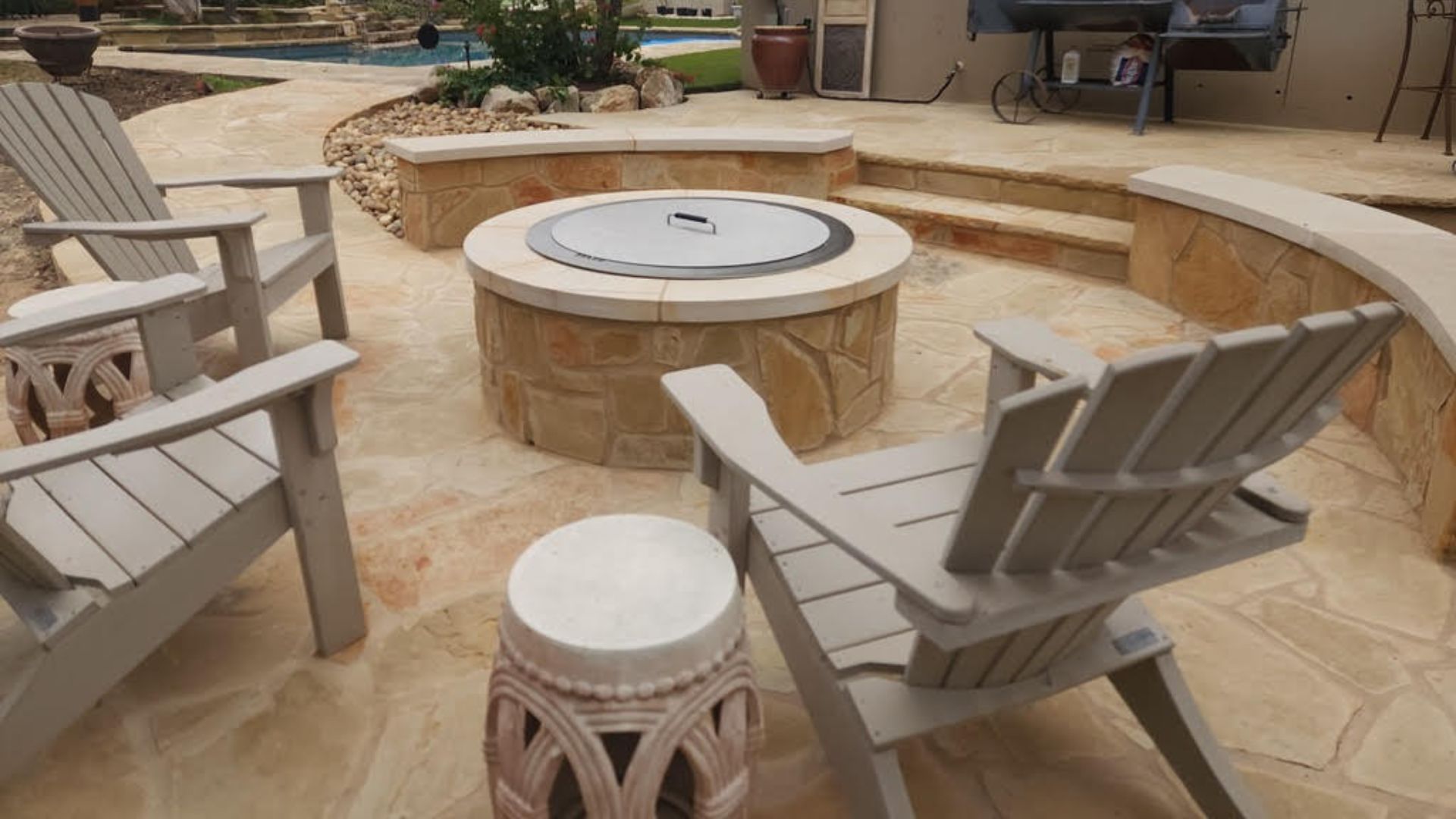
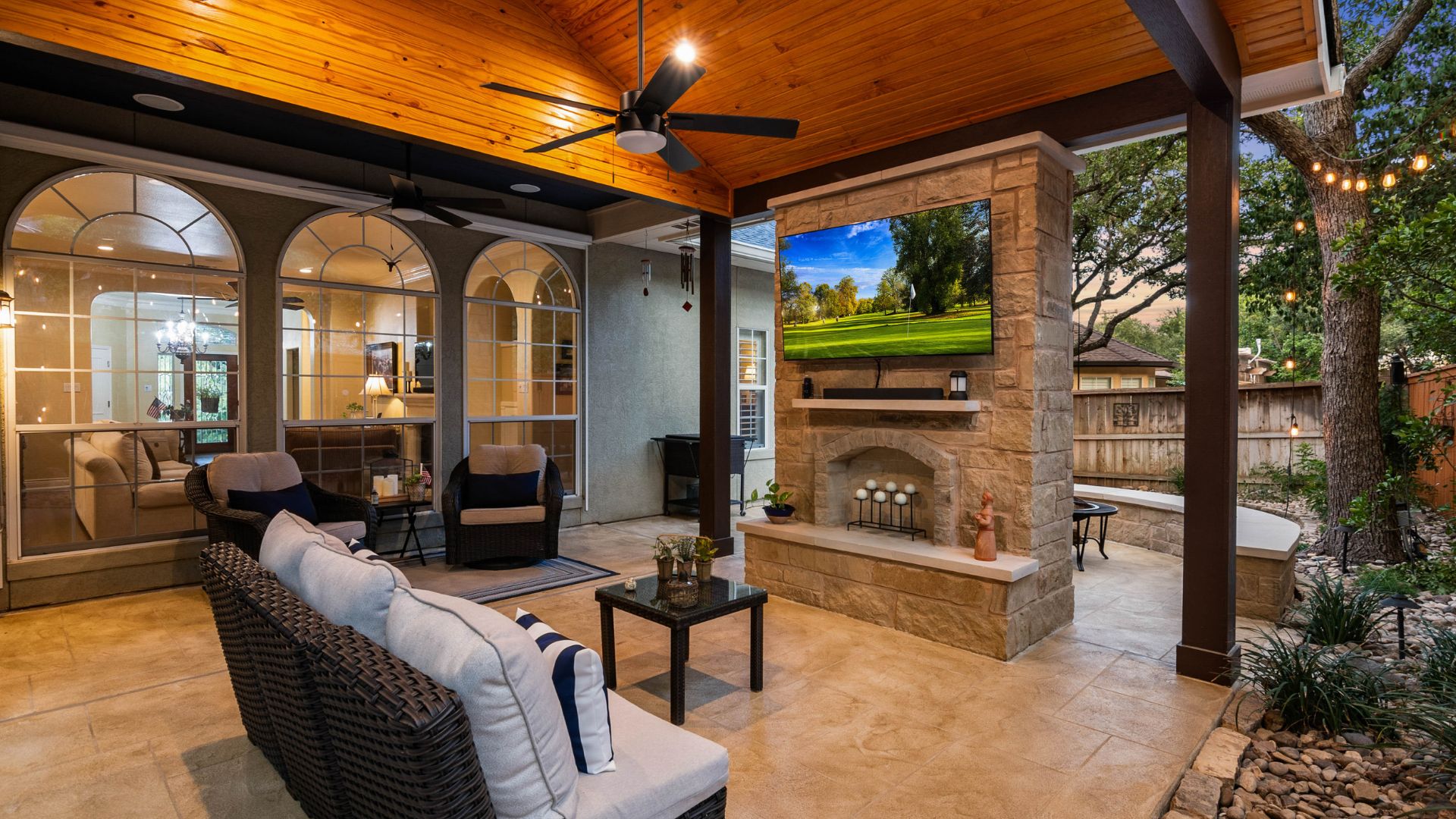
The built-in fire pit is still the classic, usually with a limestone ring or a curved seat wall around it so everybody has somewhere to sit. An outdoor fireplace is taller and makes more of a statement. Set under a covered patio or pavilion with the right clearances, it can also hide your view of the neighbor’s back fence. Then there’s the linear gas burner, the sleek modern option you turn on and off with a switch.
Whatever you go with, pay attention to what’s around it. You want a noncombustible surface (an overlay, pavers or stone) running well out past the edge of the fire, with mulch and dry grass kept back. If it’s gas, get the line in before the patio surface goes down. Texas counties also put burn bans in place during dry spells, so look up your county’s rules before choosing between wood and gas.
Outdoor kitchens aren’t just a grill on a cart anymore. Of the homeowners Houzz surveyed who built or upgraded one, 68% ran plumbing, electrical or heating out to it, 10 points more than in 2024. Storage was up 15 points.
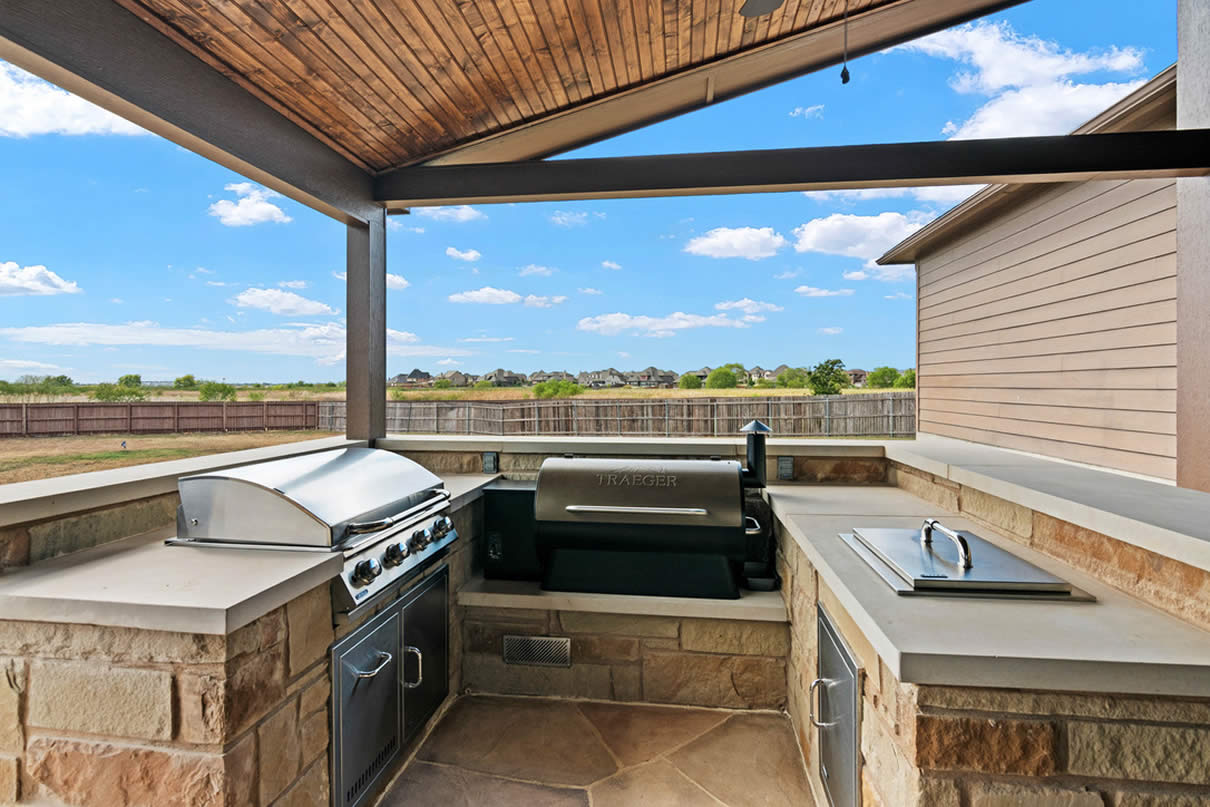
As for what’s going in them, 85% have a grill, 62% a beverage fridge and 59% a sink, and almost a third now have a pizza oven. Down here we’d put griddles and smokers on that list too. That Schertz kitchen we mentioned has Lueders stone, a Bull griddle, a Traeger, and a built-in cooler with a drain, which is about as Texas as it gets.
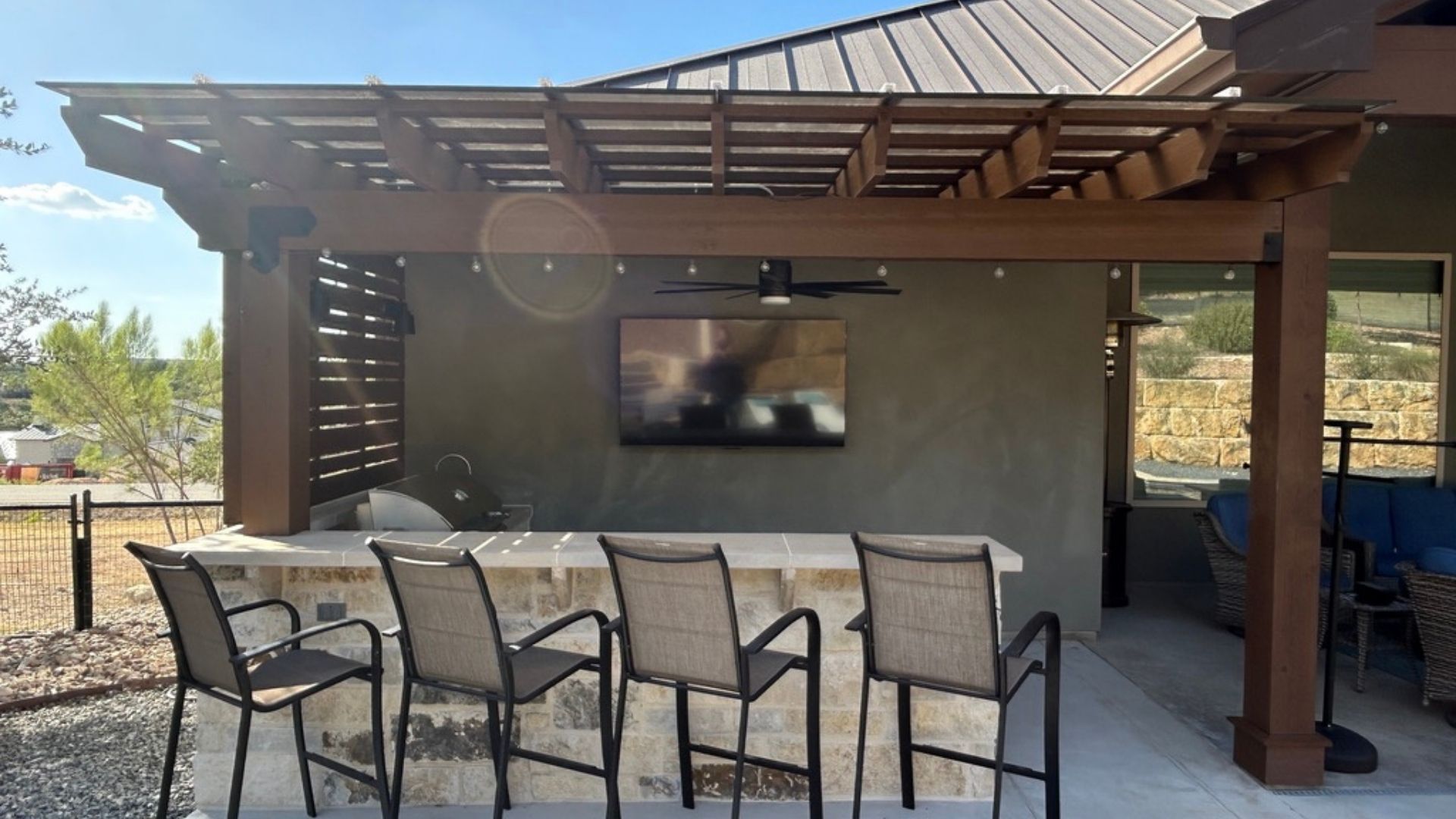
Coverage is changing a little. Partially covered kitchens climbed to 30% of projects while fully covered ones slipped. That lines up with what we see. People like the grill under a roof and the table out in the open when the weather’s nice.
When we design one, we start with the floor, since grease and spilled drinks end up there sooner or later. A sealed overlay or dense pavers clean up easily. Stone or stucco works great for the island base. Dark countertops look sharp but get uncomfortably hot in full afternoon sun, so think about where the shade falls. We also try to angle the cooking area so smoke drifts away from guests, and keep the walk to the indoor kitchen short. Oh, and run the gas, water, drains and power before the patio’s done, not after. There are more ideas on our outdoor kitchens page.
We can’t predict the future (if we could, we’d have called this summer’s heat a lot better). Going by what people are asking us right now, though, here’s our best guess.
We think resurfacing will keep growing. A huge number of homes around San Antonio went up in the 2000s and 2010s, and those patios are getting tired. Most owners would rather upgrade what’s there than pay to break it up and haul it off.
Water-wise design will probably just become normal. We’ve lived under drought rules since 2024, and even if the aquifer bounces back, we doubt many people go back to big thirsty lawns.
.jpg)
Mixing materials looks like it’s here to stay, too. An overlay patio, a limestone wall and a paver path in colors that work together is fast becoming the Hill Country look.
And more folks will plan for comfort from the start, with shade, fans, lights and outlets roughed in before the patio is finished. That’s how you get a space you’ll use in August and December alike.
Still on the fence? Try our Find Your Outdoor Style quiz or grab the free design guide. Either one’s a decent place to start.
Think of it as a new decorative surface laid over the concrete slab you already have. Our crew finishes it by hand so it looks like stone, tile or a pattern you pick out. Since the old slab stays put, there’s no demolition.
Usually. Small cracks and worn spots are really common, and we patch those while we prep. A slab that’s lifting, sinking or broken into chunks is a different story and has to be fixed or replaced first. We’ll tell you which one you’ve got when we come out.
Honestly, color makes more difference than material. Light, warm colors stay cooler than dark ones no matter what they’re made of. If your slab’s in good shape, an overlay is usually quicker. Pavers make more sense for brand-new patios or ground that likes to move.
Most people end up choosing between Texas limestone, flagstone and travertine. Limestone has that regional look, flagstone is great for paths and free-form shapes, and travertine is a pool-deck favorite.
There’s no wrong answer. Wood gives you the crackle and that campfire smell, while gas gives you instant flame and no ash to shovel out. Burn ban rules are set county by county and can change fast when it’s dry, so check yours first. Either way, we plan the fuel line, the surface and the seating together.
A lot of the time, yes, if the slab is sound and we can get utilities to it. Plenty of clients add the kitchen and put a TPC overlay on the old patio at the same time so it all looks finished. Gas, water and electrical go in first, and the surface goes on last.
That depends on what you’re building and where you live. Resurfacing an existing patio tends to be simpler than adding a roof, an outdoor kitchen or a retaining wall. Either way, our process covers the permits and HOA paperwork so you don’t have to.
Fall and winter, hands down. It’s easier on the crew and the materials, and you’ll be done in time to enjoy spring. If you can get a design consultation on the calendar in October or November, the timing tends to work out nicely.
Let’s Talk About YOUR Backyard
The right trend for you is the one that fits how your family actually uses the yard, and that still looks good after a few South Texas summers. Maybe that’s a TPC overlay over that tired old slab. Maybe it’s a limestone fire pit, or a paver path winding through a garden that barely needs watering. We’re happy to help you figure it out.
Archadeck of San Antonio offers a free design consultation, a fixed-price quote and warranties on our work. Poke around our photo gallery for ideas, then give us a call at (210) 702-3223 or get started online to set up a visit.

Neal & Rebecca Neathery – Owners Archadeck of San Antonio