Most of the outdoor kitchen requests we get start the same way. Someone's been grilling on a little cart by the back door for a decade, dragging plates back and forth through the kitchen door every time they cook, and they've finally decided they're done with it. That's usually the whole story behind why people call Archadeck of San Antonio. Not a Pinterest board. Just being tired of a setup that never worked that well in the first place.
A custom outdoor kitchen solves that, but it does more than people expect going in.
Beyond the Basic Grill Island
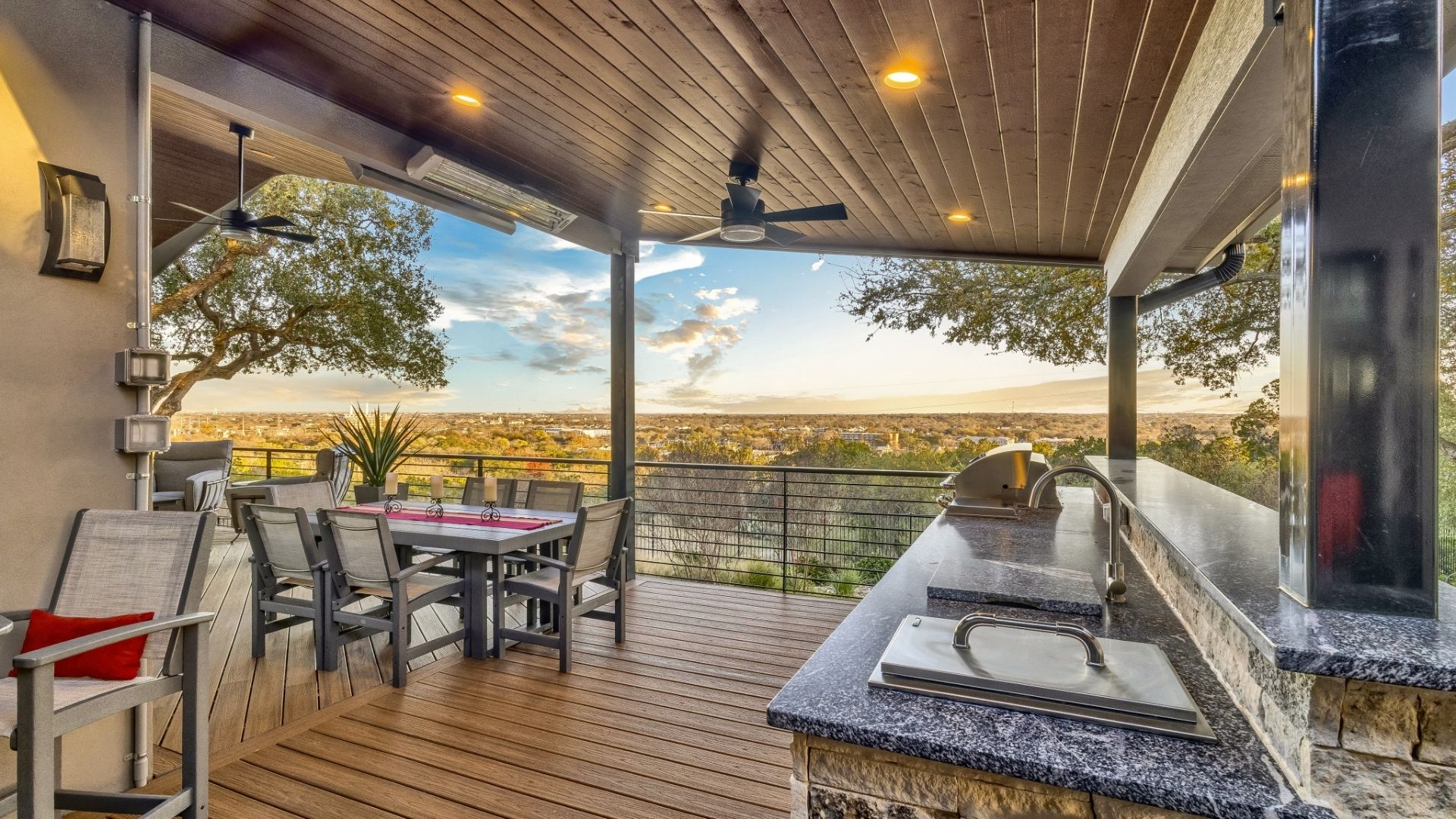
Most people picture a grill island when they hear "outdoor kitchen." Maybe a fridge tucked underneath. That's usually where the conversation starts with us, and almost never where it ends up.
We had a client last year who was sure she just wanted a grill and a little counter space. Two meetings later she'd added a side burner, a sink, and enough storage for every skewer and spatula she owned, because it turned out she smoked ribs most weekends and was tired of running utensils in and out of the house. Not everyone goes that route. Plenty of folks really do just want somewhere to flip burgers without leaving the party every five minutes. Neither approach is wrong. The countertop material, how big the footprint gets, how close it sits to the covered patio — none of that gets locked in until we know what you're going to cook out there, not what looked good in a magazine.
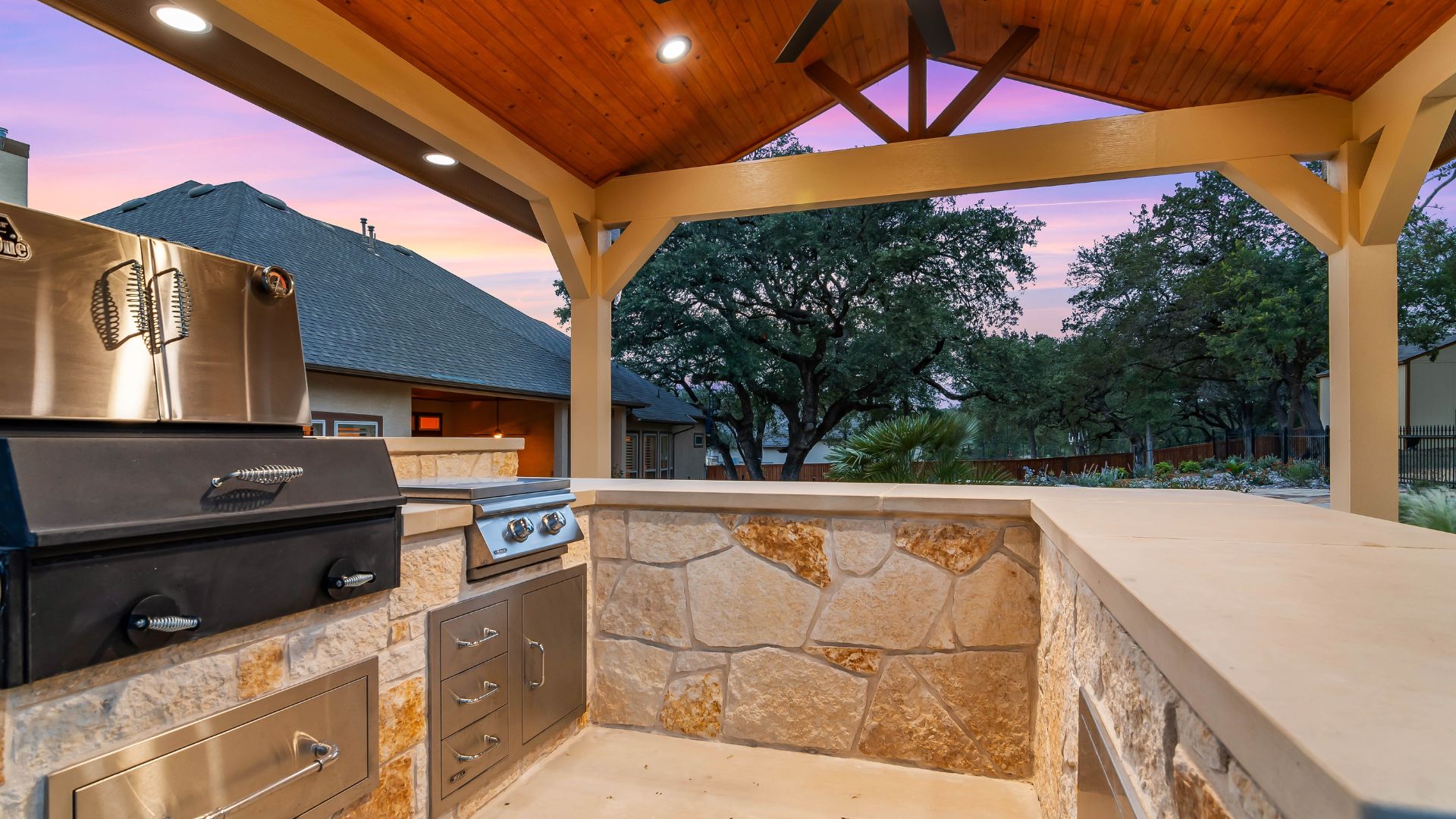
Because we handle design and construction as one team, the kitchen gets built into the rest of your outdoor space instead of getting bolted onto whatever patio already exists. That matters more than people think until they've seen it done both ways.
How Homeowners End Up Using These Spaces
Here's the part that surprises people. Once a kitchen goes in, it rarely gets used the way the client described in the design meeting. A guy who told us he mainly wanted somewhere to grill on weekends ends up cooking dinner out there four nights a week by July, because who wants to heat up the house when it's 101 degrees.
For a lot of families, that's the biggest shift. The outdoor kitchen quietly becomes the main kitchen for a good chunk of the year. Real counter space, a sink, somewhere to prep food instead of balancing a cutting board on a cooler.
Then there's entertaining, which looks different for every household. Some people want bar seating for six because Friday nights turn into a whole neighborhood thing. Others want just enough room for two stools and a beer fridge, because their idea of entertaining is one or two close friends, not a crowd. Holidays tend to push the kitchen hardest — turkey fryers at Thanksgiving, tamales going on the smoker at Christmas, the Fourth of July grill running nonstop from noon until dark. YUM! Having the cooking happen outside means your indoor kitchen stays clean and your guests aren't all crammed into one room.
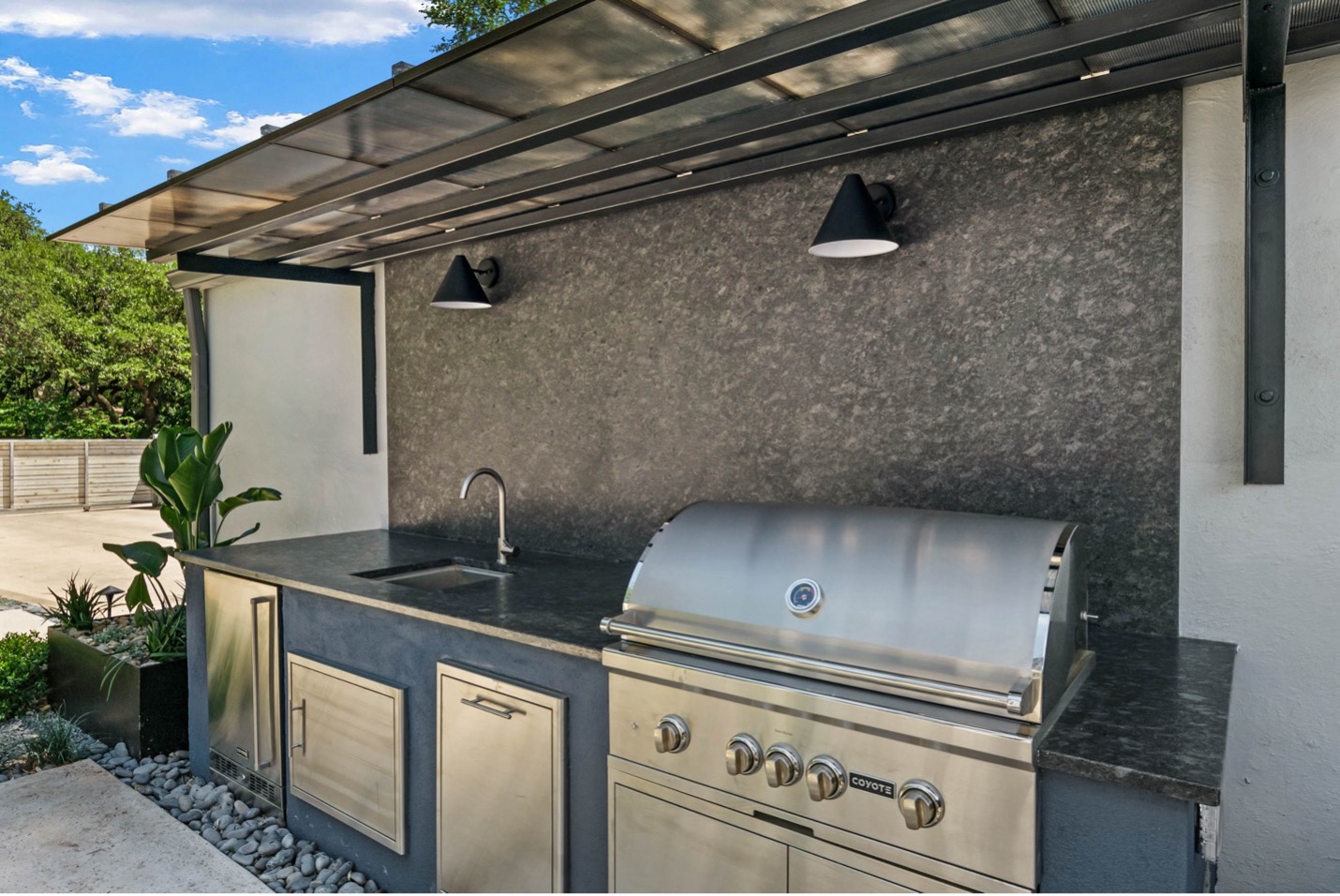
And plenty of people barely entertain at all. They just wanted somewhere nice to cook dinner and sit outside with a cup of coffee before the heat sets in. That's a perfectly good reason to build one.
Football Season Changes the Math
This is where things get interesting for a lot of our Hill Country clients, especially with the season kicking off soon. Nobody's fighting for a parking spot three hours before kickoff, and the bathroom line is your own hallway.
Picture a typical Saturday. Burgers and brats going on the grill an hour before kickoff. Something low and slow on the smoker so it's falling apart by halftime. A beverage fridge close enough to the seating that nobody's running back inside during a third-down stop. A few clients have even had us rough in an outlet or mount point near the patio for a weatherproof TV, so the game never leaves their sight, even mid-cook.
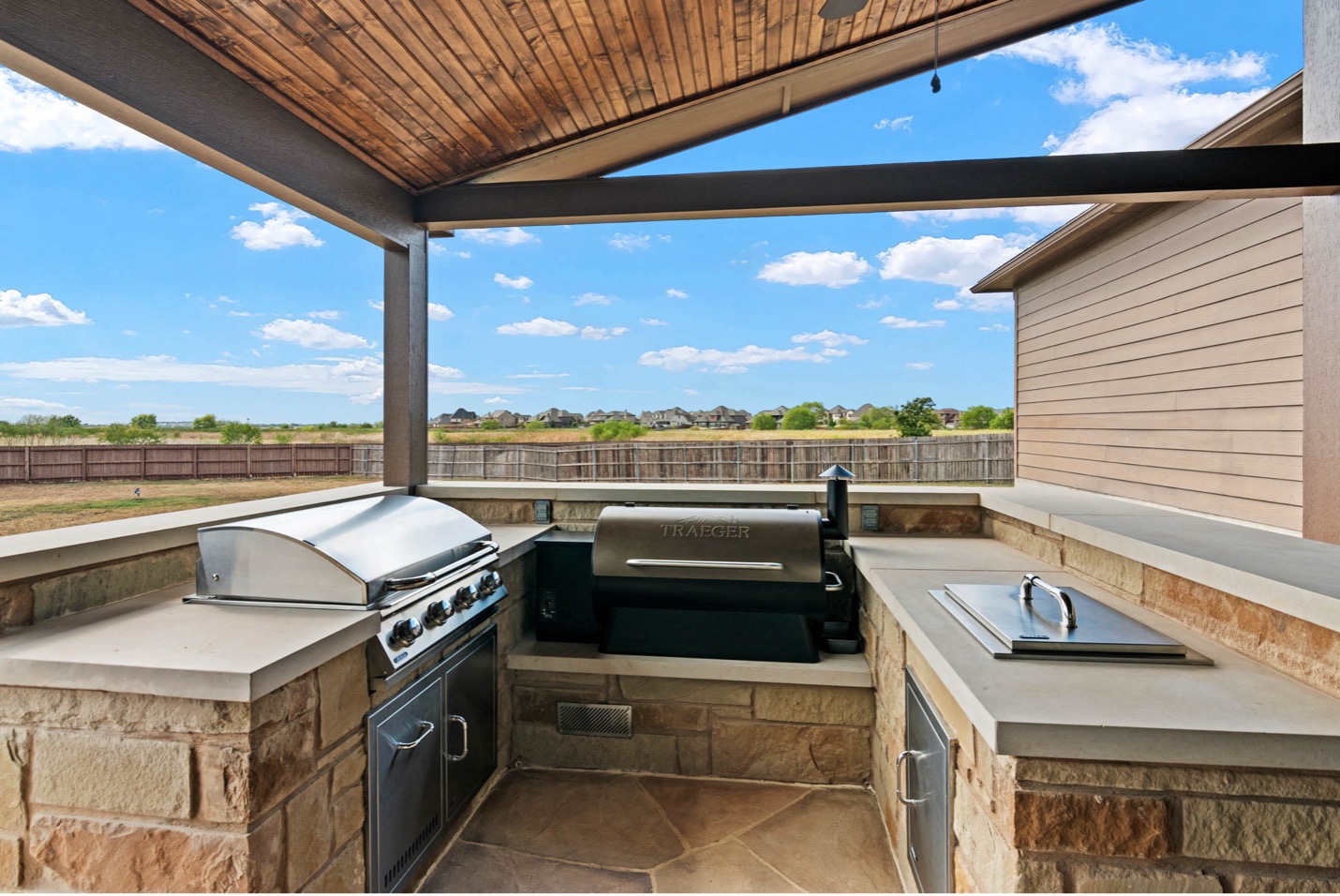
You don't need a huge kitchen to pull this off. A grill, a side burner, and a decent stretch of counter for toppings and sides covers most game days just fine. What matters is where you put it. Too far from the seating and the person cooking misses the game. Too close, and by the second quarter everybody's eyes are watering from the smoke. We usually catch this in the first design meeting, but only if you tell us up front that game days matter to you, otherwise it's an easy thing to overlook until the kitchens already built.
Building for Hill Country Weather, Not Against It
Outdoor kitchens here must meld with things a lot of other regions don't worry about. Materials need to survive brutal summer sun without cracking or fading, and they also need to handle the occasional hard freeze without falling apart. Shade matters a lot more here than people expect. Meaning a shade pergola or covered patio near the kitchen can be the difference between using the space in August or avoiding it entirely.
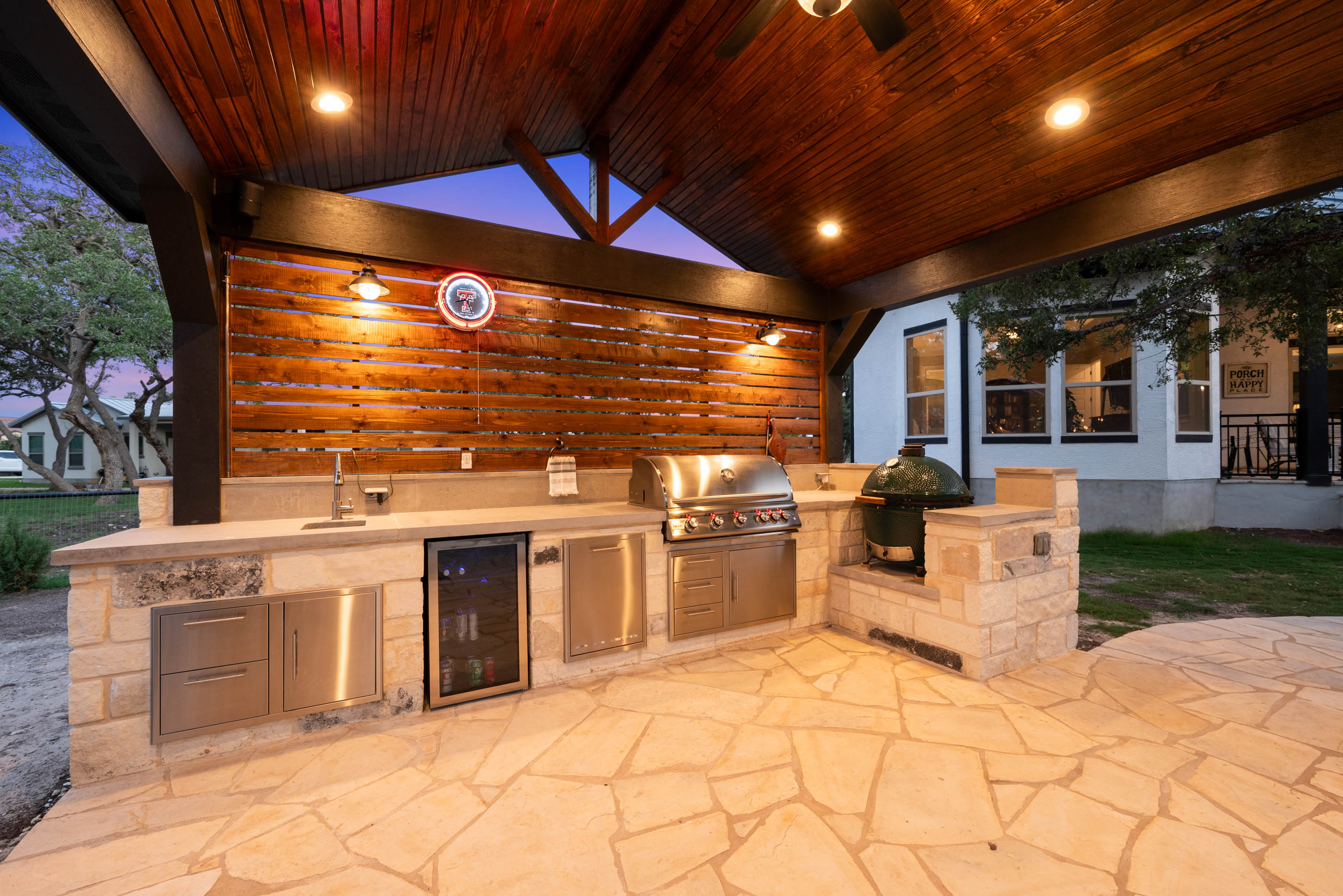
Lot shape plays into it too. A sloped property in Boerne needs a different approach than a flat backyard closer to San Antonio proper, which is part of why a cookie-cutter kit kitchen rarely works well out here.
Archadeck of San Antonio is locally owned, but we're backed by a national brand with more than 40 years in this business, and we build more outdoor living spaces than anyone else in North America. Our process covers everything — design, permitting, materials, the actual build — so you're not managing five different contractors to get one backyard project done.
Start Planning Now, Before the Season Gets Away From You
Design and permitting take time, so if you're picturing a finished kitchen this year, now's the point to start, not September. Football aside, a kitchen like this doesn't sit unused the rest of the year, it just ends up being where family weeknight dinner happens, or where you're enjoying your coffee before the heat rolls in.
Give Archadeck of San Antonio call at (210) 702-3223 or get started online to set up a free design consultation.

Neal & Rebecca Neathery – Owners Archadeck of San Antonio