Anyone who's spent a July evening in the Minneapolis area knows how quickly a screened porch can go from "nice to have" to "the only place you want to be." This year, mosquitoes have actually been on the milder side, but Minnesotans know better than to count on that lasting from one week to the next. Our state has a well-earned reputation as one of the "buggier" ones once temperatures climb, and history says things can pick up fast once daytime highs settle above 50°F, especially from June through August. A screened porch means you don't have to gamble on it — whether it's a quiet spring evening, a warm summer night, or a crisp fall afternoon, you get to enjoy the outdoors on your own terms, bugs or no bugs.
A screened porch is still the most straightforward fix out there. No sprays that wash off, no citronella candles fighting a losing battle against a breeze, just a solid barrier between you and whatever's in the yard. So, what should you consider when you're designing one for our weather?
The Screen System Matters More Than the Screen
Here's something a lot of homeowners don't realize until it's too late: porch screening can often look bad after a few years, not because the mesh wore out, but because of how it was hung in the first place. Old-school screening gets stapled down, or it's pressed into a spline groove by hand. Put that through a handful of Minnesota freeze-thaw cycles and it starts to loosen. Before long you've got a panel that bulges in the middle, and somebody's on a ladder trying to restretch it evenly, which almost never works as well the second time around.
That's the reason Archadeck of Minneapolis has moved almost entirely to SCREENEZE® for our screened in porch installs. It's a two-piece system comprised of an aluminum base and a vinyl cap that snap together instead of relying on staples or spline. You lay the screen across the base, snap the cap down over it, and the cap does the stretching for you as it locks in.
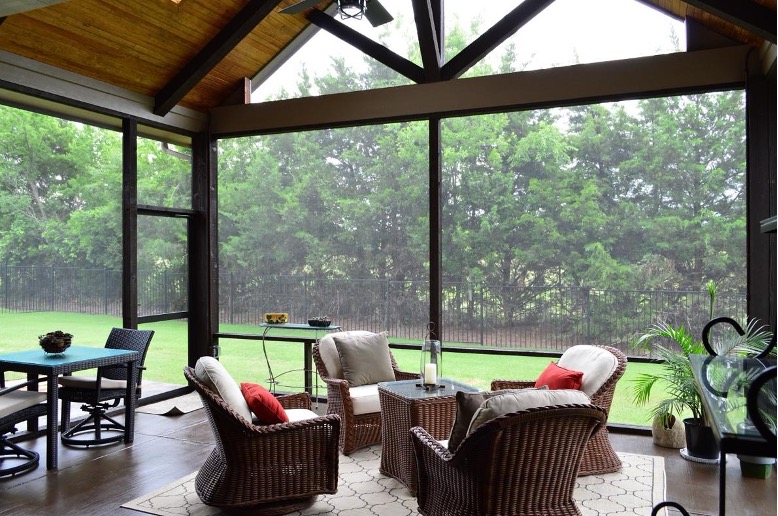
A few reasons it holds up better here specifically:
- Once it's snapped in, the screen doesn't slowly work itself loose the way a stapled screen does. If anything, it tends to sit a little tighter after the first season, not looser.
- Panels can run as large as 10 by 15 feet, up to about 150 square feet, without needing a post to break up the opening. That's a real difference if you want unobstructed views.
- Fixing damage is about as simple as it gets. Something tears a screen, whether it’s a branch, a dog mishap, whatever… and you just pop the cap, drop in new screen, snap it back down. No tools, no restretching.
- You're still choosing your mesh separately from the frame. Standard 17x14 does fine against flies and mosquitoes without cutting into airflow much. If you're closer to wetlands, a wooded lot, or one of the river bluff neighborhoods, the tighter 20x20 "no-see-um" weave is usually worth the upgrade, since it keeps out the gnats and midges that slip right through standard screen.
There's No Real "Off Season" for Bugs Here
Minnesota's mosquito year doesn't rise and fall on one clean curve, it comes in overlapping waves depending on snowmelt, rain, and how much standing water is sitting around. Spring mosquitoes get going as soon as it's consistently above 50°F. The cattail mosquitoes peak in early July. Right behind them, Culex mosquitoes start building and don't really let up until late August. And let’s not forget the Asian Tiger mosquitoes that bite day into night. Practically speaking, that means there isn't a month where it's safe to leave your porch unscreened, which is part of why we offer floor-to-ceiling screening instead of stopping partway up a rail. Gnats especially like to come in low, right along the floor line, and they'll find any gap that's there.
Creature Comforts With Enjoyment In Mind
While the roof is open during construction, it's the perfect time to think ahead about how you'll use the space. Wiring for ceiling lighting at this stage means you won't be stuck with lamps and extension cords once the porch is finished — flip a switch and you've got even overhead light for evening gatherings. It's also worth planning for a few extra outlets while the walls are open: a spot for a table lamp, a radio or speaker, or simply a place to charge your phone without running a cord across the room. These are small additions during the build, but they make a big difference in how comfortable and functional the porch feels once you're living in it.
Roofing: Shade in July, Shelter in October
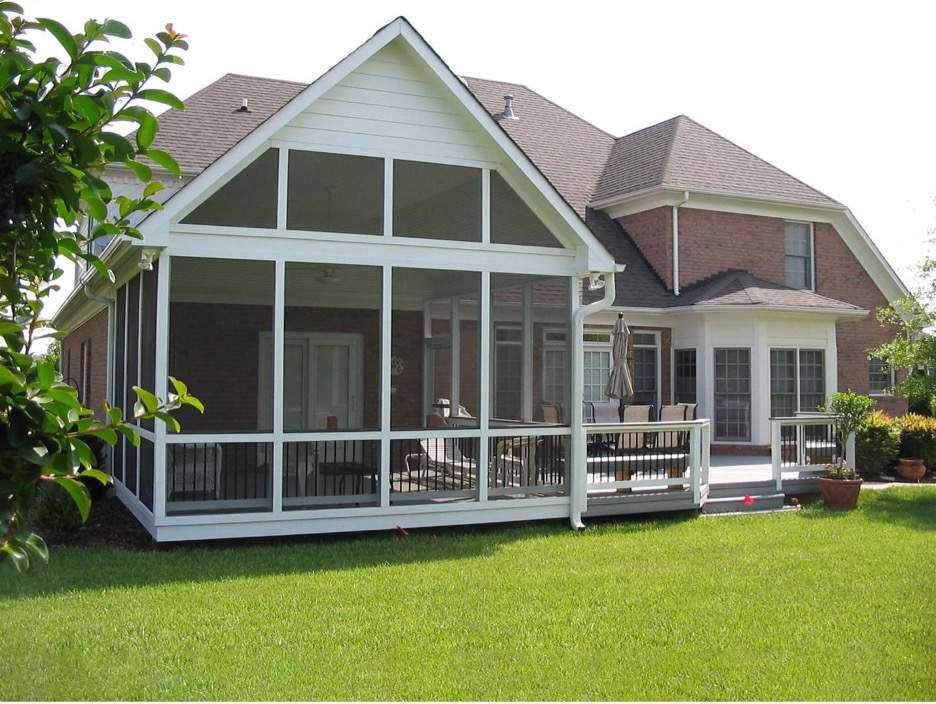
Your porch roof is basically pulling double duty in our climate. Most of our client’s choose a solid roof tied directly into the home's existing roofline. This approach looks like it belongs there instead of looking tacked on, and it sheds snow the same way the rest of the house does.
Don't Skip the Floor
People underestimate what a porch floor deals with. Rain gets driven sideways through the screen, snow can pile up against it in winter. Composite decking holds up. So does tongue-and-groove porch flooring, or a concrete or tile floor that's been properly sloped and sealed allowing somewhere for water to go.
Design It to Carry Into Fall
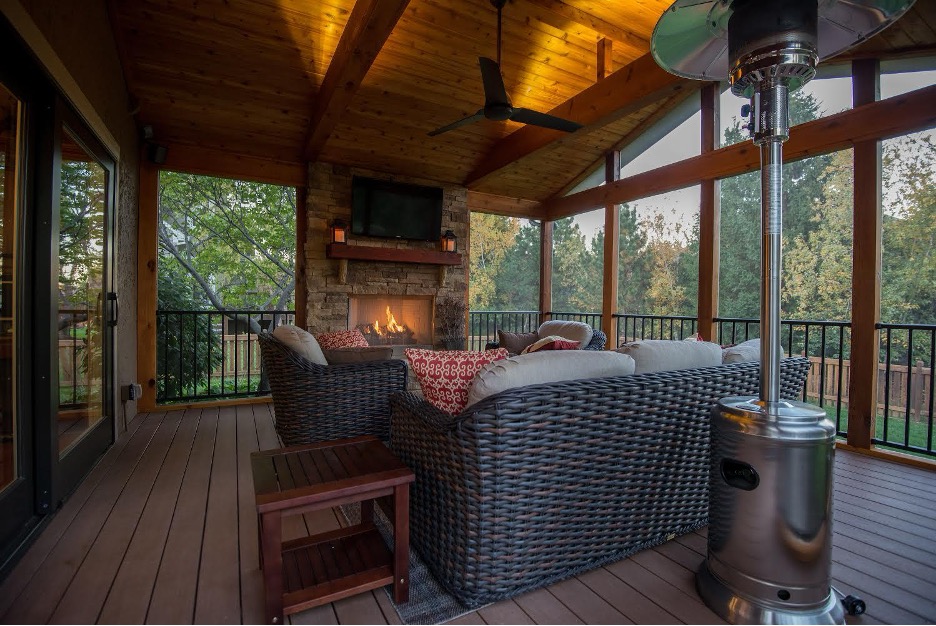
The porches that get the most use aren't the ones treated as a summer-only room. A gas or wood-burning fireplace stretches the season well past when the bugs finally settle down. This happens to line up nicely with when the outdoor conditions are at their most pleasant anyway. Infrared or overhead heaters do a similar job without taking up as much visual real estate.
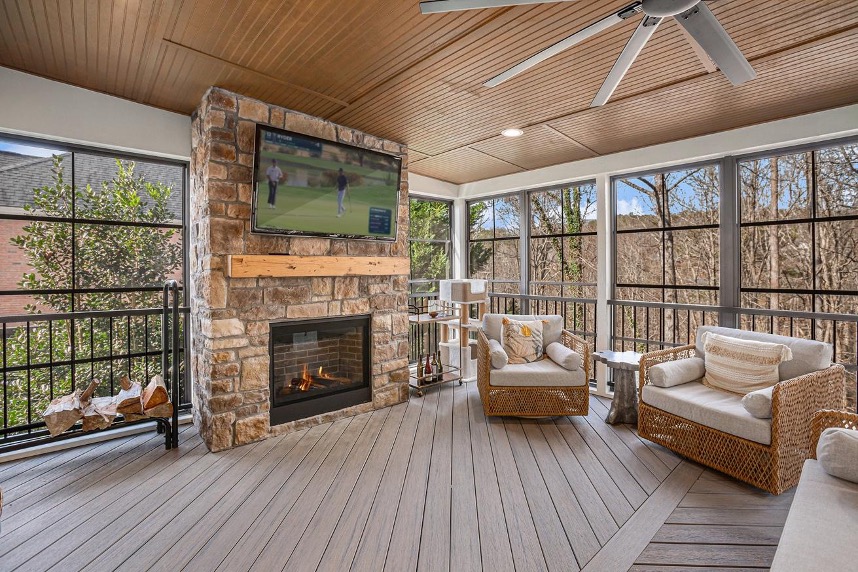
If you want to go further, retractable vinyl window systems in addition to your screen swaps out once the weather turns, which turns the porch into a three-season room without tearing anything apart. A handful of homeowners go all the way and add insulated windows, so the space works close to year-round. Even a small lighting change helps. String lights feel like summer, but a couple of sconces or a pendant over the seating area makes the same room feel like it belongs to October just as much as June.
Furniture Has to Work Both Ends of the Season
Since a screened porch must hold up in humid July and a chilly October evening alike, the furniture needs more range than it would on an open deck. Powder-coated aluminum and all-weather wicker hold up against Minnesota's humidity better than most other frames. Cushions with quick-dry foam cores and covers you can take off and wash are worth the extra cost too. Remember, a screen keeps bugs out, but it doesn't stop pollen or dust from settling into fabric. Most people land on some mix of a dining or bar-height table for company and a lower, softer seating area for the nights it's just family.
Quick Word on Permits
A screened porch counts as a permanent structure with a roof, so most cities in our service area require a detailed plan, weight and wind load calculations, and sometimes engineering review. We are here to take the complexity out of all this for the homeowner.
Where to Go From Here …
A screened porch is one of the few backyard projects that earns its keep in spring, summer and fall. It keeps bugs out all summer, is a space you'll still use once the leaves turn, and something ready to go the second the snow's gone next spring. If you're weighing layout, roofline, or screen options for your own space, Archadeck of Minneapolis Metro builds screened porches around our local Minnesota's freeze-thaw cycles.
If you want a screened porch built with quality materials, craftsmanship, attention to detail and integrity, give us a call at (651) 401-4636 or set up a design consultation and we can talk through what makes sense for your home and property.